


More than 150 Ohio black bear sightings reported in 2010
Lead Summary
By
-
(ODNR)
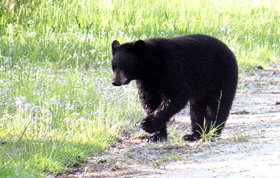
One hundred sixty-four black bear sightings were reported in Ohio last year, according to the Ohio Department of Natural Resources (ODNR), Division of Wildlife. Of that number, state wildlife personnel confirmed 64 of those sightings, an increase compared to the 51 confirmed sightings in 2009.
The confirmed sightings of 2010 occurred in 23 different counties and involved an estimated 31 different black bears, the Division of Wildlife reported.
Most of the reported bear sightings were in northeastern and south-central counties. Athens and Portage counties led the state reporting 13 sightings each.
Sightings occurred in every month of 2010 except January and December. The majority of bears were reported May through August, which is the peak of black bear breeding and dispersal of young male bears.
Twenty-nine of the 164 sightings involved damage or nuisance behavior, such as damage to bird feeders, beehives and garbage containers. An estimated 19 individual bears were involved in these cases.
Across the state there were eight reported sightings of sows with cubs and two sightings of lone cubs.
For comparison, in 2009 state wildlife officials confirmed 51 of a total 119 black bear sightings. The confirmed sightings were in 21 counties and involved about 31 different black bears. A record 165 bear sightings was reported in 2002.
The Division of Wildlife began formally keeping records of black bear observations in 1993. Since that time, bears have been reported in 58, and confirmed in 50 of Ohio’s 88 counties.
The black bear is listed as endangered in Ohio and protected by state law.
Efforts to monitor the black bear have been supported by the Wildlife Diversity and Endangered Species Fund, which receives donations from Ohioans through the state income tax check-off program and by the purchase of cardinal license plates. Individuals wanting to donate to the fund can also donate online at wildohio.com.
The Ohio Department of Natural Resources ensures a balance between wise use and protection of our natural resources for the benefit of all. Visit the ODNR Web site at ohiodnr.com.
More than 100 bobcat sightings reported
• Increased evidence of bobcats living in Ohio’s southeastern counties continues with the confirmation of 106 sightings by state wildlife officials during 2010, according to the Ohio Department of Natural Resources (ODNR), Division of Wildlife. The reports show an increase from the 92 verified sightings in 2009.
The bobcat is listed as an endangered species in Ohio and protected by state law.
The bobcat was found throughout Ohio during early settlement, but as land was converted for crops and communities the bobcat’s population declined. By 1850, the animal could no longer be found living in the state. A handful of unverified sightings in the 1960s marked the bobcat’s unofficial return to Ohio. Since 1970, state wildlife biologists have verified 464 bobcat sightings in 33 counties.
Verification of the elusive bobcat includes photographs of the animal and its tracks; encounters through incidental trapping, from which animals are later released; recovery of road kill and sightings by Division of Wildlife personnel. The majority of the 2010 verified reports occurred in Noble County and the immediate surrounding counties.
In an effort to further clarify estimated populations, ongoing Division of Wildlife research is currently utilizing scent stations and remote cameras for observation in several locations throughout southeast Ohio.
These efforts have been supported by the Wildlife Diversity and Endangered Species Fund, which receives donations from Ohioans through the state income tax check-off program and by the purchase of cardinal license plates. Individuals wanting to donate can also make an online contribution at wildohio.com.[[In-content Ad]]
One hundred sixty-four black bear sightings were reported in Ohio last year, according to the Ohio Department of Natural Resources (ODNR), Division of Wildlife. Of that number, state wildlife personnel confirmed 64 of those sightings, an increase compared to the 51 confirmed sightings in 2009.
The confirmed sightings of 2010 occurred in 23 different counties and involved an estimated 31 different black bears, the Division of Wildlife reported.
Most of the reported bear sightings were in northeastern and south-central counties. Athens and Portage counties led the state reporting 13 sightings each.
Sightings occurred in every month of 2010 except January and December. The majority of bears were reported May through August, which is the peak of black bear breeding and dispersal of young male bears.
Twenty-nine of the 164 sightings involved damage or nuisance behavior, such as damage to bird feeders, beehives and garbage containers. An estimated 19 individual bears were involved in these cases.
Across the state there were eight reported sightings of sows with cubs and two sightings of lone cubs.
For comparison, in 2009 state wildlife officials confirmed 51 of a total 119 black bear sightings. The confirmed sightings were in 21 counties and involved about 31 different black bears. A record 165 bear sightings was reported in 2002.
The Division of Wildlife began formally keeping records of black bear observations in 1993. Since that time, bears have been reported in 58, and confirmed in 50 of Ohio’s 88 counties.
The black bear is listed as endangered in Ohio and protected by state law.
Efforts to monitor the black bear have been supported by the Wildlife Diversity and Endangered Species Fund, which receives donations from Ohioans through the state income tax check-off program and by the purchase of cardinal license plates. Individuals wanting to donate to the fund can also donate online at wildohio.com.
The Ohio Department of Natural Resources ensures a balance between wise use and protection of our natural resources for the benefit of all. Visit the ODNR Web site at ohiodnr.com.
More than 100 bobcat sightings reported
• Increased evidence of bobcats living in Ohio’s southeastern counties continues with the confirmation of 106 sightings by state wildlife officials during 2010, according to the Ohio Department of Natural Resources (ODNR), Division of Wildlife. The reports show an increase from the 92 verified sightings in 2009.
The bobcat is listed as an endangered species in Ohio and protected by state law.
The bobcat was found throughout Ohio during early settlement, but as land was converted for crops and communities the bobcat’s population declined. By 1850, the animal could no longer be found living in the state. A handful of unverified sightings in the 1960s marked the bobcat’s unofficial return to Ohio. Since 1970, state wildlife biologists have verified 464 bobcat sightings in 33 counties.
Verification of the elusive bobcat includes photographs of the animal and its tracks; encounters through incidental trapping, from which animals are later released; recovery of road kill and sightings by Division of Wildlife personnel. The majority of the 2010 verified reports occurred in Noble County and the immediate surrounding counties.
In an effort to further clarify estimated populations, ongoing Division of Wildlife research is currently utilizing scent stations and remote cameras for observation in several locations throughout southeast Ohio.
These efforts have been supported by the Wildlife Diversity and Endangered Species Fund, which receives donations from Ohioans through the state income tax check-off program and by the purchase of cardinal license plates. Individuals wanting to donate can also make an online contribution at wildohio.com.[[In-content Ad]]