


McClain High School football cheerleaders volunteer at Fort Salem Indian Mound
Lead Summary
By
-
Courtesy of Destiny Bryson
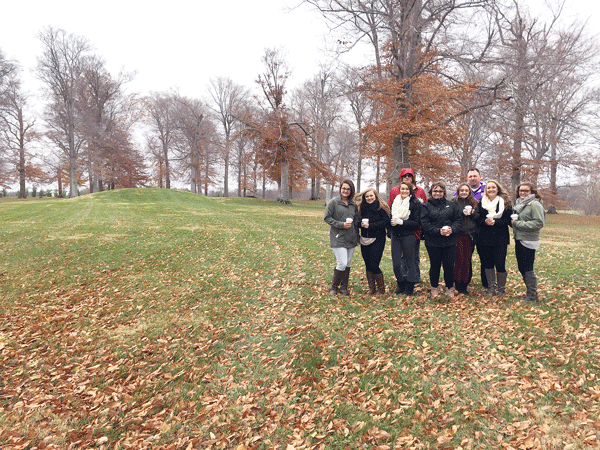
On Saturday, Nov. 19, the McClain High School football cheerleaders and High School Principal Jason Potts, were joined by Dr. Paul Gardner, Midwest Regional Director of The Archaeological Conservancy at Fort Salem Indian Mound near Pricetown.
As part of the group’s many apology efforts, the students where there on their own time, to visit the mound and learn the history of this local preserved Native American site. The education that the students received will prove valuable, as they begin their work to create an informational brochure for Fort Salem earthwork. This brochure will be used at the Highland County Visitors Bureau and distributed to visitors interested in Highland County’s Native American history.
The day began with a tour of the earthwork led by Dr. Gardner. He explained that Fort Salem, was created by a group of Ohio Valley Indians (with both Adena and Hopewell cultural influence) sometime between 50 B.C. to AD 500. It is a circular enclosure about 450 feet in diameter that surrounds a conjoined mound.
The larger mound of the conjoined pair was about six feet high and 60 feet in diameter, while the smaller one was about four feet high and 40 feet in diameter. The wall that surrounded the enclosure was about three feet high and was paralleled for much of its 700 foot plus length by an exterior ditch. The below picture illustrates the sites’ original structure. Today, both mounds are about two feet lower and the wall is only one to two feet high.
The group then assembled at the Welcome Center in Hillsboro, where Dr. Gardner continued to educate the group on the few known facts about the site.
• The walls and mounds remain prominent and the possibility that the site was never plowed makes it especially desirable as a research preserve.
• The site's location is in between two great Hopewell population concentrations: those along the Little Miami River Northeast of Cincinnati and those along the Scioto River and Paint Creek near Chillicothe. The site may hold clues to how these two populations interacted.
• The site is not readily assigned to any particular culture, as it has attributes of both Adena and Hopewell constructions. The plan of a circular earthen wall and ditch surrounding a central mound is typically Adena. However, placing the ditch outside the wall would be unusual for an Adena mound and the circular scale of the earthwork is more typical of the Hopewell.
Dr. Gardner describes Fort Salem as “one of the best preserved earthworks remaining in private ownership in America.” Thanks to the restoration work completed by a local resident to Highland County, William “Bill” Bear, we are all able to experience and enjoy this beautiful earthwork.
The meeting was orchestrated by Destiny Bryson, executive director of the Visitors Bureau of Highland County. Director Bryson recognized that this experience would be a great opportunity to seize a teaching moment that would expose the students to a variety of educational experience and benefit our county and the many visitors from around the world. She is looking forward to sharing the brochure at her office.
Fort Salem is open daily, year round from dusk until dawn. It is located at 4206 Certier Road, Lynchburg. Visit http://fortsalemindianmound.com for more information.
On Saturday, Nov. 19, the McClain High School football cheerleaders and High School Principal Jason Potts, were joined by Dr. Paul Gardner, Midwest Regional Director of The Archaeological Conservancy at Fort Salem Indian Mound near Pricetown.
As part of the group’s many apology efforts, the students where there on their own time, to visit the mound and learn the history of this local preserved Native American site. The education that the students received will prove valuable, as they begin their work to create an informational brochure for Fort Salem earthwork. This brochure will be used at the Highland County Visitors Bureau and distributed to visitors interested in Highland County’s Native American history.
The day began with a tour of the earthwork led by Dr. Gardner. He explained that Fort Salem, was created by a group of Ohio Valley Indians (with both Adena and Hopewell cultural influence) sometime between 50 B.C. to AD 500. It is a circular enclosure about 450 feet in diameter that surrounds a conjoined mound.
The larger mound of the conjoined pair was about six feet high and 60 feet in diameter, while the smaller one was about four feet high and 40 feet in diameter. The wall that surrounded the enclosure was about three feet high and was paralleled for much of its 700 foot plus length by an exterior ditch. The below picture illustrates the sites’ original structure. Today, both mounds are about two feet lower and the wall is only one to two feet high.
The group then assembled at the Welcome Center in Hillsboro, where Dr. Gardner continued to educate the group on the few known facts about the site.
• The walls and mounds remain prominent and the possibility that the site was never plowed makes it especially desirable as a research preserve.
• The site's location is in between two great Hopewell population concentrations: those along the Little Miami River Northeast of Cincinnati and those along the Scioto River and Paint Creek near Chillicothe. The site may hold clues to how these two populations interacted.
• The site is not readily assigned to any particular culture, as it has attributes of both Adena and Hopewell constructions. The plan of a circular earthen wall and ditch surrounding a central mound is typically Adena. However, placing the ditch outside the wall would be unusual for an Adena mound and the circular scale of the earthwork is more typical of the Hopewell.
Dr. Gardner describes Fort Salem as “one of the best preserved earthworks remaining in private ownership in America.” Thanks to the restoration work completed by a local resident to Highland County, William “Bill” Bear, we are all able to experience and enjoy this beautiful earthwork.
The meeting was orchestrated by Destiny Bryson, executive director of the Visitors Bureau of Highland County. Director Bryson recognized that this experience would be a great opportunity to seize a teaching moment that would expose the students to a variety of educational experience and benefit our county and the many visitors from around the world. She is looking forward to sharing the brochure at her office.
Fort Salem is open daily, year round from dusk until dawn. It is located at 4206 Certier Road, Lynchburg. Visit http://fortsalemindianmound.com for more information.