


Deepening cuts intensify damage to Ohio communities
By Wendy Patton
policymattersohio.org
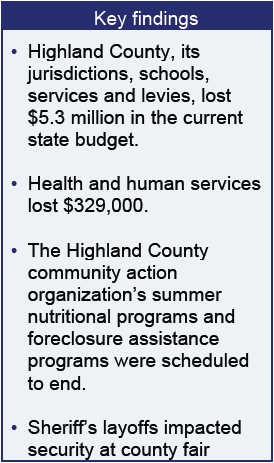
COMMENTARY – Cuts in state support to counties, cities, villages, townships and special districts have deepened across Ohio, resulting in slashed services, closed facilities and layoffs, according to a new report by Policy Matters Ohio www.policymattersohio.org.
The in-depth analysis provides county-level data on cuts and descriptions, from local sources, of the damage done.
Private wealth is built on a foundation of well-maintained highways, good schools and other basic services, things we often take for granted. The more we cut, the more our wealth erodes.
The 2012-13 state budget, passed by the Ohio Legislature and signed by Gov. John Kasich in July 2011, immediately cut Local Government Funds by 25 percent.
Those cuts deepened to 50 percent in July 2012, and the loss of hundreds of millions of dollars more looms as the estate tax, levied on the wealthiest 8 percent of Ohioans, is set to be eliminated next year.
The biggest cuts in state aid to local government have come from:
• The Local Government Fund (LGF), a revenue-sharing program dating back to 1934 that provides general operating funds for communities.
• Reimbursements that compensated for local property taxes eliminated during the past decade.
The cuts total just over $1 billion for calendar years 2012 and 2013, a nearly 50 percent reduction from 2010 and 2011. All local entities – county, city, village, township or special district – are affected.
County health and human services levies – for senior services, children’s services, mental health and developmental disabilities and health districts – lost $210 million.
Policy Matters researchers interviewed local officials around the state and reviewed media accounts to understand the impact of cuts.
Findings include understaffed children’s services and less help for abused and neglected children; homeless people turned away from rural shelters; senior centers consolidated or closed even as need for their services has risen.
Local officials worry about aging police cruisers and fire engines, deteriorating bridges and water systems, fewer safety and emergency workers, curtailed service hours and shuttered recreation facilities.
As legislators prepare to make decisions about the next state budget, they should look closely at conditions in the communities they represent.
What’s happening on the ground tells a story of struggle and decline in too many Ohio communities.
It’s time to restore investment needed for a better future.
Wendy Patton is the state fiscal director for Policy Matters Ohio.
[[In-content Ad]]