


Fixes needed for new FAFSA
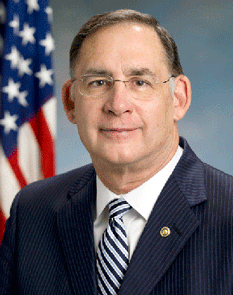
By U.S. Sen. John Boozman
R-Arkansas
High school seniors are busy planning for the future. As they study for Advanced Placement exams, buy their final yearbook and anticipate graduation celebrations, many pursuing higher education are filling out financial aid paperwork to help pay for the skyrocketing costs of college.
More than 17 million students annually complete the Free Application for Federal Student Aid (FAFSA) form to get crucial information about financial support eligibility from schools. This is a critical component for undergraduates in selecting where they will study.
In past years, the application process was lengthy and complex, which posed a significant barrier for prospective students and led Congress to make changes. In 2020, lawmakers authorized the U.S. Department of Education (DoEd) to simplify the application with the goal of encouraging young adults to realize the dream of obtaining a college degree.
While the number of questions considerably decreased from 108 to 36, there has been little else to applaud. Typically, the FAFSA form is available on October 1. However, DoEd’s rollout of the new process for the 2024-2025 school year has been a failure. The form wasn’t accessible until January 6 after a week of intermittent availability. This delay, and additional technical glitches, is leaving applicants with little time to review financial aid offers before having to make a final decision on where to attend.
In recent weeks, college leaders and financial aid administrators have shared their concerns about the troubling impact these hurdles will have on the those considering registering for the fall semester and the potential negative impact on enrollment numbers.
This chaos has forced some colleges nationwide to extend admissions deadlines so students have more time to make the decision that best meets their needs.
Just as problematic is a disadvantage many children of rural communities will face. The revised method for calculating financial aid assistance requires these families disclose agricultural business assets. Farm assets can range well into the millions of dollars, with the price of a combine harvester alone often exceeding $400,000.
Changes to the needs analysis formula unfairly penalize farm families and could significantly cut financial aid eligibility for rural students.
The new FAFSA question misunderstands how these hardworking men and women operate. Farm assets cannot be cashed out to support a loan in the same capacity as traditional investments, so the cost of these tools should be exempt from calculating student aid.
Bipartisan efforts in the Senate and House of Representatives are underway to overturn this misguided rule.
As families struggle to navigate the new FAFSA form, we’re working to hold the administration accountable. In early February, I joined a bipartisan group of colleagues in demanding answers from the DoEd Secretary about cuts to college aid for the children of agriculture producers. We need to know who the department consulted from rural communities to create the new guidance, if anyone at all.
The Government Accountability Office has also launched an investigation into this debacle. This is a good step that will deliver transparency and help prevent more students from experiencing the current setbacks.
Many scholars depend on financial aid to afford college. We have a responsibility to ensure they have access to this vital support that allows them to build a foundation for success.
* * *
••• Publisher's note: A free press is critical to having well-informed voters and citizens. While some news organizations opt for paid websites or costly paywalls, The Highland County Press has maintained a free newspaper and website for the last 25 years for our community. If you would like to contribute to this service, it would be greatly appreciated. Donations may be made to: The Highland County Press, P.O. Box 849, Hillsboro, Ohio 45133. Please include "for website" on the memo line.
FAFSA is laughable
I agree FAFSA needs revamped. Completing FAFSA for a child if you are a working couple is a joke. Aid is calculated based on what the parents have accumulated in assets, savings and retirement pensions available that looks like accessible funds. So college students get punished because their parents are “rich” therefore no aid is available, federal loans or grants aren’t an option so private loans have to be taken out in the student’s name placing them in large amounts of debt in the end. Private loans aren’t eligible for the government write off/forgiveness when that occurs. Freebies and giveaways continue for a certain part of the population. So, let’s keeping punishing those who want to get an education and use it to be a model, working, tax-paying citizen once they graduate and start working in their field of choice.