


Vein disease and treatments
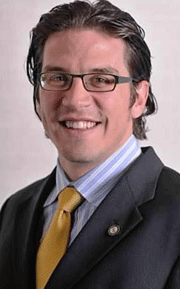
By Dr. Brian Santin
Vascular Surgeon
CMH Regional Health System
Wilmington – Approximately 50 percent of women and 40 percent of men in the United States suffer from some type of vein problem. Risk factors include age, medical history, lack of movement, and standing for long periods of time.
Vein problems are often found to be a cause of leg swelling in many patients. Sometimes, varicose veins can be big, bulging veins that can lead to aching and swelling in the legs. Spider veins are small clusters of red, blue, or purple veins appearing on the thighs, claves, ankles, or face. They look like a tree or spider web.
While both varicose and spider veins maybe unsightly, they are also sometimes an indication of a more serious circulation problem.
Treatments for varicose veins can many times be covered by insurance companies and most often are conducted in the office setting in a procedure room as an outpatient.
Sclerotherapy is a minimally invasive procedure that treats spider veins. It involves injecting a solution directly into the troubling vein to cause the vein to collapse and disappear.
A vascular surgeon is trained to diagnose and treat the entire spectrum of vein problems, including leg swelling.
Healthy Outlook is a periodic column by physicians, nurses or other health care professionals associated with CMH Regional Health System/Clinton Memorial Hospital. Dr. Santin is a board-eligible vascular surgeon with Ohio Vein & Vascular, Suite 200, CMH Professional Building, Wilmington. Healthy Outlook includes information from several resources, including the writer's professional experience.
[[In-content Ad]]