


‘Straight to the heart’: Unprecedented translation work brings words to life for millions
Lead Summary
By
Jehovah’s Witnesses-
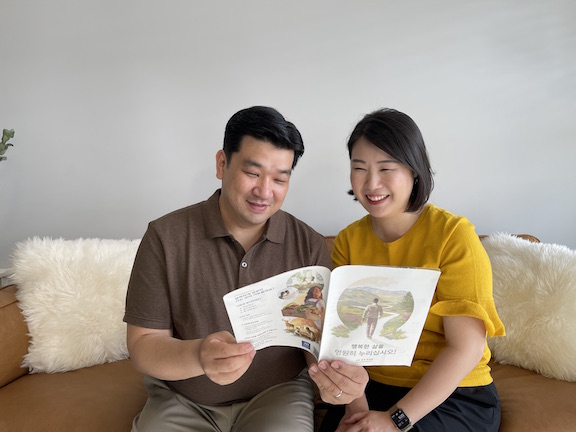
?? (pronounced salang) is love in the Korean language. Cincinnati, Ohio residents Caleb and Carol Park speak English well, but only the Korean word speaks straight to their hearts.
“English and Korean grammar are totally different. When I read my English Bible, it requires more effort. But I can easily remember the expressions when I read my Korean Bible,” explained Caleb Park, who moved to the United States from South Korea in 2009.
That’s why the program on joy was offered in more than 500 languages on a website that boasts free content in more than 1,050 languages — jw.org — and why the Christian group behind that site, Jehovah’s Witnesses, puts so much effort into translation for even smaller language groups.
“We understand that a region’s official language may not be the language of a person’s heart,” said Robert Hendriks, the U.S. spokesperson for Jehovah’s Witnesses.
In the United States alone, some 67 million residents speak a language other than English at home.
According to UNESCO, education based on the language one speaks at home results in better quality learning, fosters respect and helps preserve cultural and traditional heritage. “The inclusion of languages in the digital world and the creation of inclusive learning content is vital,” according to its website.
“Translating spiritually uplifting material into over 1,000 languages takes a considerable amount of time and resources,” said Hendriks, “but we know that reaching a person’s heart with the Bible’s comforting message can only be accomplished if they fully understand it.”
Lao refugee Keo Sysoumang tried attending church services in English after she immigrated to the United States in 1990 but couldn’t understand them.
Raised without her parents, constantly on the run from soldiers and unable to attend school, Sysoumang never learned written Laotian.
Then she met Beverly Christenson, a Witness who was learning Laotian in order to bring comfort to refugees in their native tongue. Between alphabet posters Christenson had brought back from a trip to Laos and Laotian Bible study publications found on jw.org, she helped Sysoumang learn to read.
Studying the Bible together in Laotian brought Sysoumang the peace and hope that always eluded her in her homeland. “My heart is OK. I’m really happy,” said Sysoumang, who now resides in Fitchburg, Mass.
For the Park family, finding resources in Korean was similarly instrumental in strengthening their own love for God. When they were children, having limited resources available in Korean meant sometimes trying to understand the Bible in Chinese, English or Spanish. Thanks to the translation efforts of Jehovah’s Witnesses, they now have access to the entire New World Translation of the Bible, hundreds of helpful references, and audio/video programs available in Korean on jw.org.
“If there was only an English Bible, I would try to study the Bible in English because I want to know God. But we have the Korean Bible. I can learn Bible truths in my language, so I have a better relationship with God,” said Caleb Park.
The Parks also view such translations as evidence of God’s love for people of all languages and ethnicities. “Translations prove that Jehovah loves all people — whatever their situation, economic level or education,” said Caleb Park.
Sysoumang and the Parks have each dedicated their lives to God, been baptized as Jehovah’s Witnesses and share the Bible’s message with others in their respective languages.
“Jehovah can see all the people in the world, and he knows the situations they face,” said Caleb Park. “Translations help them to learn about Jehovah’s qualities in their language. Jehovah wants to tell them, ‘I’m here. Come close to me. I can help you. I can stay with you.’ God wants all people to learn the Bible’s message.”
“English and Korean grammar are totally different. When I read my English Bible, it requires more effort. But I can easily remember the expressions when I read my Korean Bible,” explained Caleb Park, who moved to the United States from South Korea in 2009.
That’s why the program on joy was offered in more than 500 languages on a website that boasts free content in more than 1,050 languages — jw.org — and why the Christian group behind that site, Jehovah’s Witnesses, puts so much effort into translation for even smaller language groups.
“We understand that a region’s official language may not be the language of a person’s heart,” said Robert Hendriks, the U.S. spokesperson for Jehovah’s Witnesses.
In the United States alone, some 67 million residents speak a language other than English at home.
According to UNESCO, education based on the language one speaks at home results in better quality learning, fosters respect and helps preserve cultural and traditional heritage. “The inclusion of languages in the digital world and the creation of inclusive learning content is vital,” according to its website.
“Translating spiritually uplifting material into over 1,000 languages takes a considerable amount of time and resources,” said Hendriks, “but we know that reaching a person’s heart with the Bible’s comforting message can only be accomplished if they fully understand it.”
Lao refugee Keo Sysoumang tried attending church services in English after she immigrated to the United States in 1990 but couldn’t understand them.
Raised without her parents, constantly on the run from soldiers and unable to attend school, Sysoumang never learned written Laotian.
Then she met Beverly Christenson, a Witness who was learning Laotian in order to bring comfort to refugees in their native tongue. Between alphabet posters Christenson had brought back from a trip to Laos and Laotian Bible study publications found on jw.org, she helped Sysoumang learn to read.
Studying the Bible together in Laotian brought Sysoumang the peace and hope that always eluded her in her homeland. “My heart is OK. I’m really happy,” said Sysoumang, who now resides in Fitchburg, Mass.
For the Park family, finding resources in Korean was similarly instrumental in strengthening their own love for God. When they were children, having limited resources available in Korean meant sometimes trying to understand the Bible in Chinese, English or Spanish. Thanks to the translation efforts of Jehovah’s Witnesses, they now have access to the entire New World Translation of the Bible, hundreds of helpful references, and audio/video programs available in Korean on jw.org.
“If there was only an English Bible, I would try to study the Bible in English because I want to know God. But we have the Korean Bible. I can learn Bible truths in my language, so I have a better relationship with God,” said Caleb Park.
The Parks also view such translations as evidence of God’s love for people of all languages and ethnicities. “Translations prove that Jehovah loves all people — whatever their situation, economic level or education,” said Caleb Park.
Sysoumang and the Parks have each dedicated their lives to God, been baptized as Jehovah’s Witnesses and share the Bible’s message with others in their respective languages.
“Jehovah can see all the people in the world, and he knows the situations they face,” said Caleb Park. “Translations help them to learn about Jehovah’s qualities in their language. Jehovah wants to tell them, ‘I’m here. Come close to me. I can help you. I can stay with you.’ God wants all people to learn the Bible’s message.”