


Real Money, Real World presented to Bright Local students
Lead Summary
By
-
Bright Local Schools partnered with OSU Extension’s 4-H Youth Development Educator Kathy Bruynis to present Real Money, Real World to eighth-grade students.
Real Money, Real World, a signature program offered through OSU Extension, is an active, hand-on experience that gives young people the opportunity to make lifestyle and budge choices similar to those they will make as adults.
They study how occupations will affect their income; learn about payroll deductions by their employers, how to use a savings and checking account, and how to make life choices.
The student’s assume the role of a 27-year old adult who is married to Chris. They receive an occupation, monthly salary and the number of children (if any) in their family. At the end of the six classroom lessons, the students complete a real-life simulation.
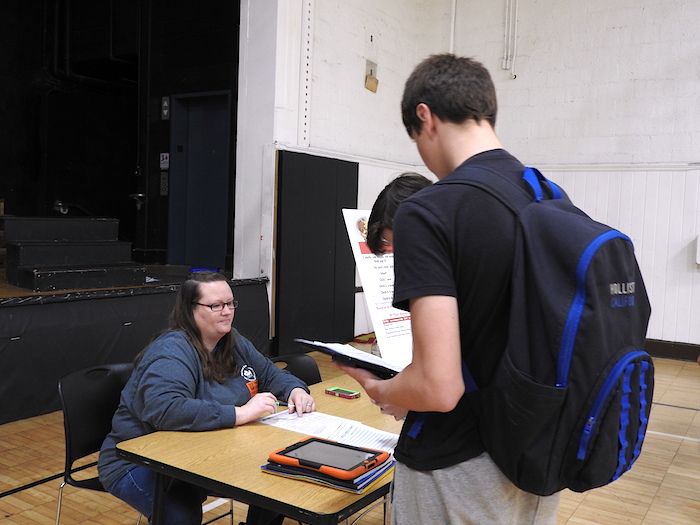
During the simulation, students interacted with local businesses where they would spend their salaries on “real life” budget items including housing, utilities, groceries, insurance, childcare, and transportation.
Throughout this activity, students keep track of their finances and attempt to complete the simulation with a positive balance. Students learn what they can afford and what they cannot afford on their income.
Many students commented on how much it costs to raise children and they didn’t realize all the bills their parents have to pay. Local community representatives were: C013, State Farm Insurance – Amatha Farrens, Highland County Community Action, First State Bank, 4-H Volunteers and OSU Extension, Adams, Fayette and Highland County.
Real Money, Real World, a signature program offered through OSU Extension, is an active, hand-on experience that gives young people the opportunity to make lifestyle and budge choices similar to those they will make as adults.
They study how occupations will affect their income; learn about payroll deductions by their employers, how to use a savings and checking account, and how to make life choices.
The student’s assume the role of a 27-year old adult who is married to Chris. They receive an occupation, monthly salary and the number of children (if any) in their family. At the end of the six classroom lessons, the students complete a real-life simulation.
During the simulation, students interacted with local businesses where they would spend their salaries on “real life” budget items including housing, utilities, groceries, insurance, childcare, and transportation.
Throughout this activity, students keep track of their finances and attempt to complete the simulation with a positive balance. Students learn what they can afford and what they cannot afford on their income.
Many students commented on how much it costs to raise children and they didn’t realize all the bills their parents have to pay. Local community representatives were: C013, State Farm Insurance – Amatha Farrens, Highland County Community Action, First State Bank, 4-H Volunteers and OSU Extension, Adams, Fayette and Highland County.