


Hillsboro Woman’s Club discusses history of quilting at June meeting
Lead Summary
By
Gretchen Huffman-
The June meeting of the Hillsboro Woman’s Club was held at the Masonic Temple with 23 members in attendance, along with two guests.
One of the guests was Darlene Prosec, who spoke on the making of quilts. Originally, she said, quilts were made principally to keep cold air out of homes. They were hung at doors and windows, and those made between 1750 and 1850 didn’t survive the test of time. She stated that there were three kinds of quilts: those made of whole cloth; appliquéd quilts, which were all made by hand; and patchwork quilts, made with quarter-inch seams that were hard to quilt through.
Artistic quilts came later, and she talked of quilting “bees,” where women got together and put quilts together using all three of those methods. In early days, young women were encouraged to make a “baker’s dozen” (13) quilts before marrying. Those girls’ mothers made an heirloom quilt as a wedding gift.
Sewing machines were invented in the 1800s, so any quilt with machine-made stitches has been made since that time, Prosec added. She also described Victorian “crazy quilts,” which included all kinds of patches and often embroidered embellishments.
Prosec informed her audience that quilting gained new importance during World War I, and quilting stopped during the Depression years. Later, printed feed sacks came along and were used for quilting pieces. During World War II, signature quilts were popular, and people signed them and set the printing by ironing over them.
The art form of quilting practically died out during the 1950s and 1960s, she said, but it was revived in the 1970s and 1980s. The milestone of America’s bicentennial in 1976 produced an avalanche of various arts and crafts.
[[In-content Ad]]
Prosec also reminded her audience of a Quilt Show to be held July 8 and 9 at the Hillsboro High School off US 62 South. There will be raffles, many door prizes and a silent auction at this event.
When the speaker asked for questions or comments, one member showed her quilt, one of many made to be hung on clotheslines or porch banisters to give secret “messages” to those in the Underground Railroad movement. This topic is the theme of a book called “Hidden in Plain View.”
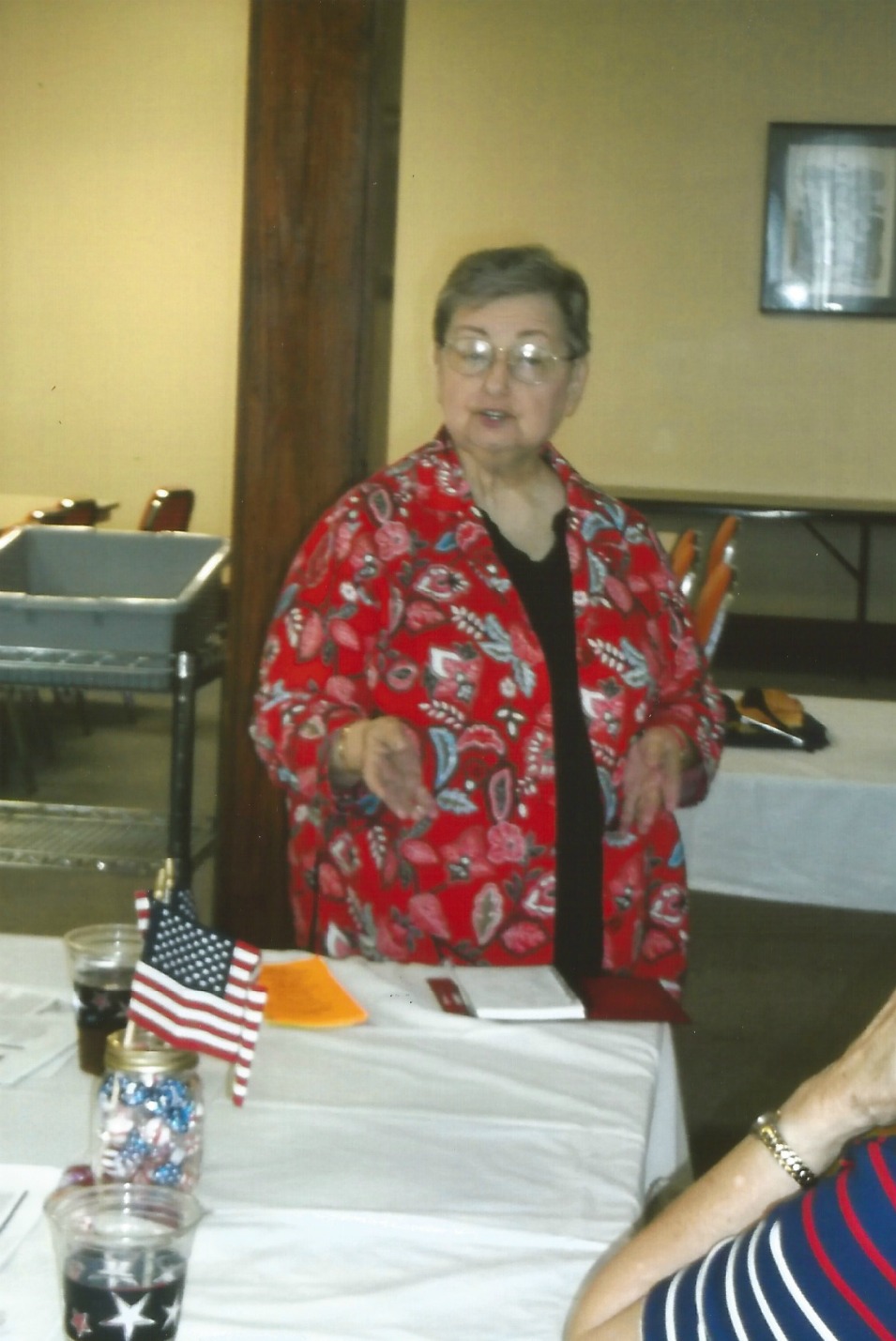
Earlier, the members had enjoyed a delicious catered luncheon by Farmhouse Catering of Sinking Spring. During the short business meeting that followed, Woman’s Club president Mary Todd Hardeman spoke of the importance of Flag Day and relayed some interesting facts regarding its formation. In the year 1916, US President Woodrow Wilson set the day as June 14, and later, Harry Truman signed it into a Congressional holiday in 1949.
With the club’s reports of the secretary and the treasurer both being approved, the club adjourned to meet again on the second Tuesday in September, following a summer hiatus.
One of the guests was Darlene Prosec, who spoke on the making of quilts. Originally, she said, quilts were made principally to keep cold air out of homes. They were hung at doors and windows, and those made between 1750 and 1850 didn’t survive the test of time. She stated that there were three kinds of quilts: those made of whole cloth; appliquéd quilts, which were all made by hand; and patchwork quilts, made with quarter-inch seams that were hard to quilt through.
Artistic quilts came later, and she talked of quilting “bees,” where women got together and put quilts together using all three of those methods. In early days, young women were encouraged to make a “baker’s dozen” (13) quilts before marrying. Those girls’ mothers made an heirloom quilt as a wedding gift.
Sewing machines were invented in the 1800s, so any quilt with machine-made stitches has been made since that time, Prosec added. She also described Victorian “crazy quilts,” which included all kinds of patches and often embroidered embellishments.
Prosec informed her audience that quilting gained new importance during World War I, and quilting stopped during the Depression years. Later, printed feed sacks came along and were used for quilting pieces. During World War II, signature quilts were popular, and people signed them and set the printing by ironing over them.
The art form of quilting practically died out during the 1950s and 1960s, she said, but it was revived in the 1970s and 1980s. The milestone of America’s bicentennial in 1976 produced an avalanche of various arts and crafts.
[[In-content Ad]]
Prosec also reminded her audience of a Quilt Show to be held July 8 and 9 at the Hillsboro High School off US 62 South. There will be raffles, many door prizes and a silent auction at this event.
When the speaker asked for questions or comments, one member showed her quilt, one of many made to be hung on clotheslines or porch banisters to give secret “messages” to those in the Underground Railroad movement. This topic is the theme of a book called “Hidden in Plain View.”
Earlier, the members had enjoyed a delicious catered luncheon by Farmhouse Catering of Sinking Spring. During the short business meeting that followed, Woman’s Club president Mary Todd Hardeman spoke of the importance of Flag Day and relayed some interesting facts regarding its formation. In the year 1916, US President Woodrow Wilson set the day as June 14, and later, Harry Truman signed it into a Congressional holiday in 1949.
With the club’s reports of the secretary and the treasurer both being approved, the club adjourned to meet again on the second Tuesday in September, following a summer hiatus.