


Bluegrass superstar Del McCoury coming to Chillicothe
Lead Summary
By
Press Release-
Vince Gill says it simply, and maybe best: “I’d rather hear Del McCoury sing ‘Are You Teasing Me’ than just about anything.”
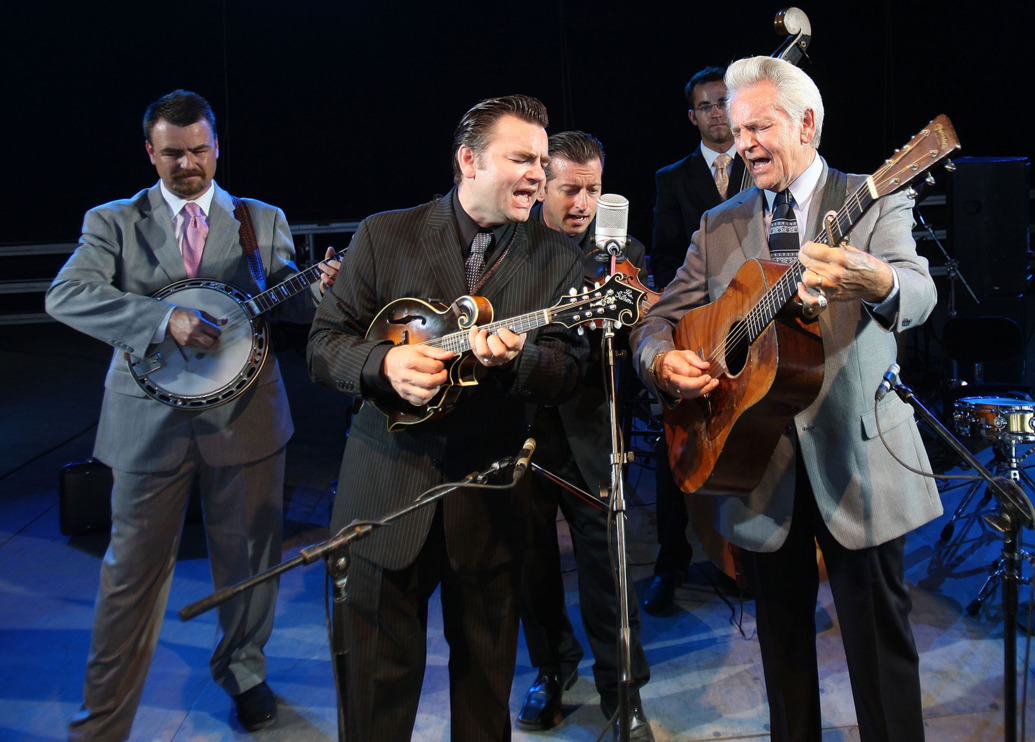
For 50 years, McCoury’s music has defined authenticity for hard-core bluegrass fans-count Gill among them-as well as a growing number of fans among those only vaguely familiar with the genre. And while a box set, “Celebrating 50 Years of Del McCoury,” recently hit the shelves, Del McCoury’s rolling past it with a wave and a grin from his tour bus. That bus rolls into Chillicothe on July 8 at the Sugarloaf Mountain Amphitheatre as he performs as part of the Accurate Bluegrass Concert Series.
[[In-content Ad]]
The Del McCoury Band will appear July 8 at 7 p.m. at the Sugarloaf Mountain Amphitheatre in Chillicothe. Nathan Stanley, grandson of the late Ralph Stanley, will open the show.
Tickets are available at www.tecumsehdrama.com or by calling 866-775-0700.
“It gives hope to everybody – 50 years is a long time to be playing music in any field,” says another fan, Elvis Costello. “But to keep the purity that you need to do this kind of music, and the drive and the energy takes a special kind of guy.”
Indeed, McCoury is something special, a living link to the days when bluegrass was made only in hillbilly honky-tonks, schoolhouse shows and on the stage of the Grand Ole Opry, yet also a commandingly vital presence today, from prime time and late night talk show TV to music festivals where audiences number in the hundreds of thousands.
“Here’s a guy who has been playing for 50 years, and he’s still experimenting – still looking to do things outside the box, to bring other kinds of music into bluegrass form,” says Americana music icon Richard Thompson, who saw his “1952 Vincent Black Lightning” turned into a bluegrass standard when McCoury brought it into the fold. “I think that’s the best bluegrass band, period. That’s it.”
Born in York County, Pa. 70 years ago, Del McCoury would once have seemed an unlikely candidate for legendary status. Bitten hard by the bluegrass bug when he heard Earl Scruggs’ banjo in the early 50s – “everybody else was crazy about Elvis, but I loved Earl,” he says with a chuckle – McCoury became a banjo picker himself, working in the rough but lively Baltimore and D.C. bar scene into the early 1960s.
McCoury got his first taste of the limelight when he joined Bill Monroe’s Blue Grass Boys in early 1963. The “Father of Bluegrass” moved McCoury from the banjo to guitar, made him his lead singer, and gave him a lifetime’s worth of bluegrass tutelage direct from the source in the course of little more than a year. But rather than parlay his gig with the master into a full-time career of his own, he returned to Pennsylvania in the mid-’60s to provide steady support for his new and growing family.
Within a few years, McCoury had settled into work in the logging industry and formed his own band, the Dixie Pals. For the next decade and a half, he piloted the group through a part-time career built mostly around weekend appearances at bluegrass festivals and recordings for labels ranging from the short-lived and obscure to roots music institutions like Arhoolie and Rounder Records. And while there were the inevitable personnel changes and struggles to contend with, McCoury was also building a songbook filled with classics remade in his own image and a growing number of originals – songs like “High On A Mountain,” “Are You Teasing Me,” “Dark Hollow,” “Bluest Man In Town,” “Rain And Snow,” “Good Man Like Me, “Rain Please Go Away” and more – that would become an important part of his legacy in years to come.
The first big sign of change came in 1981, when McCoury’s 14-year-old son, Ronnie, joined the Dixie Pals as their mandolin player. Banjo-playing younger brother Rob came on board five years later, and by the end of the decade, the three McCourys were ready to make a move.
“We came to Nashville in 1992,” Ron recalls, “and it was Dad’s idea. He’d been watching bluegrass on TNN – Bill Monroe, the Osborne Brothers, Jim & Jesse – and thought that it was the place to be, that we’d have a new outlet there, where we could get some more attention. And without a doubt, moving to Nashville and just going for it turned out to be really big.”
If anything, the younger McCoury’s understating the case. Armed with a new Rounder Records association and a newly named Del McCoury Band that soon included not only his sons but a complete cast of youngsters, Del McCoury’s career soared. McCoury himself got the ball rolling early in the decade with three consecutive Male Vocalist of the Year awards from the prestigious International Bluegrass Music Association (IBMA), and in 1994 the quintet began an astonishing streak of top Entertainer of the Year honors that netted them nine trophies in an 11-year stretch, along with ongoing honors for Ronnie (eight straight Mandolin Player of the Year awards), fiddler Jason Carter (three Fiddle Player of the Year trophies), and a wide array of projects featuring McCoury and the ensemble.
But though the ’90s propelled the Del McCoury Band to the top of the bluegrass world, they also gave birth to a more startling phenomenon: the emergence of the group onto the larger musical scene as a unique torchbearer for the entire sweep of bluegrass and its history. For it turned out that the unmistakable authenticity of McCoury’s music, along with his good-natured willingness to keep alert for new sounds and new opportunities, had bred fans in some unlikely places.
That bluegrass-bred stars like Gill and Alison Krauss (who first met Del at a bluegrass festival when she filled in for a missing fiddler of his) would sing his praises wasn’t surprising, but who would have expected country-rock icons like Steve Earle or jam bands like the supremely popular Phish to have joined in the chorus?
“Jon Fishman, the drummer for Phish, told me that they did an article on him for a drum magazine,” McCoury says. “They asked him what were some of his early influences, and he told them that one of them was ‘Don’t Stop the Music,’ a record I put out back at the beginning of the ’90s.”
By the second half of the ’90s, the acclaim-and Del’s open-mindedness-put McCourys in onstage jams with Phish and on the road and in the studio with Earle, bringing the Del McCoury Band’s fierce musicianship and its leader’s instantaneous, easygoing connection with listeners to new arenas. The group appeared on prime time television and began an ongoing series of visits to popular late night TV talk shows, toured rock clubs and college campuses, and found itself welcome at country and even jazz-oriented music festivals and venues.
Ronnie McCoury tells a story from a recent appearance that underlines just how broad an appeal the Band’s music has these days.
“You know, we’ve really been getting outside of the bluegrass box,” he says with a laugh. “I mean, Dad’s voice is what you’d call traditional, but he’s open-minded, too. And so it seems like in the last few years, especially, he’s become more than bluegrass-he’s being recognized as just a great singer, period. So that’s really been bridging the gap between bluegrass and other kinds of music and musicians. Last year we played at the Austin City Limits festival, and the limo driver who picked us up said he’d just taken [platinum-selling international pop star] Bjork out to the festival – and she was telling him that she wanted to see us. It’s just unbelievable.”
Yet even as they reach out to almost unimaginable audiences, Del’s music retains its signature characteristics.
“What I most admire about someone like Del,” says Gill, “is that he’s one of the last patriarchs that really played the music in its authentic way. And even though he’s willing to bend a little bit, to be out there playing at jam band festivals and things like that, it doesn’t sound like what the new people do with bluegrass. He’s done a great job of bringing new songs into the fold, but when he sings them they sound like 1959 or 1962 again. It still has the element of his voice, and the authenticity of it never goes away, never changes. And even after doing it for 50 years, he’s at the top of everybody’s list of what’s going on today with bluegrass.”
The fifth decade of that half-century of music making has been filled with new and ongoing triumphs. The Del McCoury Band has shown unprecedented stability, with but a single change in membership in 15 years; their namesake earned membership in the cast of the legendary Grand Ole Opry in 2003, and the band earned their first Best Bluegrass Album Grammy award two years later. They traveled with the groundbreaking post-O Brother “Down From The Mountain” tour, performed and recorded (on his Grammy-winning “These Days”) with Gill and with country star Dierks Bentley. They’ve made multiple appearances at the spectacular Bonnaroo Music Festival (and will appear there again in 2009) and launched an impressively popular annual New Year’s Eve show at the Ryman Auditorium, where Del first appeared on the Opry with Bill Monroe some 46 years ago.
Perhaps most importantly, McCoury took an almost unprecedented step in 2003 when he took control of his own music by creating the McCoury Music label, home to that Grammy-winning album along with a select set of releases by the Del McCoury Band, country icon Merle Haggard and more.
Perhaps surprisingly, but fittingly for a still lively legend, the new recordings were done in just a few days.
“We went through the songs pretty quickly,” says Ronnie. “Take after take, it was just great. Dad sounds better than ever on here. Part of it is because he’s been doing these songs forever, and part of it is because he always had some kind of allergy going when we went in to record, and this time he didn’t. We had a list of songs that the three of us made, with 15 or 20 songs from each of the decades and the albums that he made before he started owning his own recordings, and he would just pick some things to record on each session – and then we just went in and knocked them out. So they all have a real live feel to them.”
There’s no doubt that Celebrating 50 Years of Del McCoury is just that – a life’s work – but it’s no swan song. As far as that goes, McCoury’s already said it himself, and said it best; he may be 70, but as he sings in one of his own songs, “Don’t ever let it be said darling, that what I do don’t bring me joy; I’m a guitar-picking, bluegrass-singing, never grow up boy.”
For 50 years, McCoury’s music has defined authenticity for hard-core bluegrass fans-count Gill among them-as well as a growing number of fans among those only vaguely familiar with the genre. And while a box set, “Celebrating 50 Years of Del McCoury,” recently hit the shelves, Del McCoury’s rolling past it with a wave and a grin from his tour bus. That bus rolls into Chillicothe on July 8 at the Sugarloaf Mountain Amphitheatre as he performs as part of the Accurate Bluegrass Concert Series.
[[In-content Ad]]
The Del McCoury Band will appear July 8 at 7 p.m. at the Sugarloaf Mountain Amphitheatre in Chillicothe. Nathan Stanley, grandson of the late Ralph Stanley, will open the show.
Tickets are available at www.tecumsehdrama.com or by calling 866-775-0700.
“It gives hope to everybody – 50 years is a long time to be playing music in any field,” says another fan, Elvis Costello. “But to keep the purity that you need to do this kind of music, and the drive and the energy takes a special kind of guy.”
Indeed, McCoury is something special, a living link to the days when bluegrass was made only in hillbilly honky-tonks, schoolhouse shows and on the stage of the Grand Ole Opry, yet also a commandingly vital presence today, from prime time and late night talk show TV to music festivals where audiences number in the hundreds of thousands.
“Here’s a guy who has been playing for 50 years, and he’s still experimenting – still looking to do things outside the box, to bring other kinds of music into bluegrass form,” says Americana music icon Richard Thompson, who saw his “1952 Vincent Black Lightning” turned into a bluegrass standard when McCoury brought it into the fold. “I think that’s the best bluegrass band, period. That’s it.”
Born in York County, Pa. 70 years ago, Del McCoury would once have seemed an unlikely candidate for legendary status. Bitten hard by the bluegrass bug when he heard Earl Scruggs’ banjo in the early 50s – “everybody else was crazy about Elvis, but I loved Earl,” he says with a chuckle – McCoury became a banjo picker himself, working in the rough but lively Baltimore and D.C. bar scene into the early 1960s.
McCoury got his first taste of the limelight when he joined Bill Monroe’s Blue Grass Boys in early 1963. The “Father of Bluegrass” moved McCoury from the banjo to guitar, made him his lead singer, and gave him a lifetime’s worth of bluegrass tutelage direct from the source in the course of little more than a year. But rather than parlay his gig with the master into a full-time career of his own, he returned to Pennsylvania in the mid-’60s to provide steady support for his new and growing family.
Within a few years, McCoury had settled into work in the logging industry and formed his own band, the Dixie Pals. For the next decade and a half, he piloted the group through a part-time career built mostly around weekend appearances at bluegrass festivals and recordings for labels ranging from the short-lived and obscure to roots music institutions like Arhoolie and Rounder Records. And while there were the inevitable personnel changes and struggles to contend with, McCoury was also building a songbook filled with classics remade in his own image and a growing number of originals – songs like “High On A Mountain,” “Are You Teasing Me,” “Dark Hollow,” “Bluest Man In Town,” “Rain And Snow,” “Good Man Like Me, “Rain Please Go Away” and more – that would become an important part of his legacy in years to come.
The first big sign of change came in 1981, when McCoury’s 14-year-old son, Ronnie, joined the Dixie Pals as their mandolin player. Banjo-playing younger brother Rob came on board five years later, and by the end of the decade, the three McCourys were ready to make a move.
“We came to Nashville in 1992,” Ron recalls, “and it was Dad’s idea. He’d been watching bluegrass on TNN – Bill Monroe, the Osborne Brothers, Jim & Jesse – and thought that it was the place to be, that we’d have a new outlet there, where we could get some more attention. And without a doubt, moving to Nashville and just going for it turned out to be really big.”
If anything, the younger McCoury’s understating the case. Armed with a new Rounder Records association and a newly named Del McCoury Band that soon included not only his sons but a complete cast of youngsters, Del McCoury’s career soared. McCoury himself got the ball rolling early in the decade with three consecutive Male Vocalist of the Year awards from the prestigious International Bluegrass Music Association (IBMA), and in 1994 the quintet began an astonishing streak of top Entertainer of the Year honors that netted them nine trophies in an 11-year stretch, along with ongoing honors for Ronnie (eight straight Mandolin Player of the Year awards), fiddler Jason Carter (three Fiddle Player of the Year trophies), and a wide array of projects featuring McCoury and the ensemble.
But though the ’90s propelled the Del McCoury Band to the top of the bluegrass world, they also gave birth to a more startling phenomenon: the emergence of the group onto the larger musical scene as a unique torchbearer for the entire sweep of bluegrass and its history. For it turned out that the unmistakable authenticity of McCoury’s music, along with his good-natured willingness to keep alert for new sounds and new opportunities, had bred fans in some unlikely places.
That bluegrass-bred stars like Gill and Alison Krauss (who first met Del at a bluegrass festival when she filled in for a missing fiddler of his) would sing his praises wasn’t surprising, but who would have expected country-rock icons like Steve Earle or jam bands like the supremely popular Phish to have joined in the chorus?
“Jon Fishman, the drummer for Phish, told me that they did an article on him for a drum magazine,” McCoury says. “They asked him what were some of his early influences, and he told them that one of them was ‘Don’t Stop the Music,’ a record I put out back at the beginning of the ’90s.”
By the second half of the ’90s, the acclaim-and Del’s open-mindedness-put McCourys in onstage jams with Phish and on the road and in the studio with Earle, bringing the Del McCoury Band’s fierce musicianship and its leader’s instantaneous, easygoing connection with listeners to new arenas. The group appeared on prime time television and began an ongoing series of visits to popular late night TV talk shows, toured rock clubs and college campuses, and found itself welcome at country and even jazz-oriented music festivals and venues.
Ronnie McCoury tells a story from a recent appearance that underlines just how broad an appeal the Band’s music has these days.
“You know, we’ve really been getting outside of the bluegrass box,” he says with a laugh. “I mean, Dad’s voice is what you’d call traditional, but he’s open-minded, too. And so it seems like in the last few years, especially, he’s become more than bluegrass-he’s being recognized as just a great singer, period. So that’s really been bridging the gap between bluegrass and other kinds of music and musicians. Last year we played at the Austin City Limits festival, and the limo driver who picked us up said he’d just taken [platinum-selling international pop star] Bjork out to the festival – and she was telling him that she wanted to see us. It’s just unbelievable.”
Yet even as they reach out to almost unimaginable audiences, Del’s music retains its signature characteristics.
“What I most admire about someone like Del,” says Gill, “is that he’s one of the last patriarchs that really played the music in its authentic way. And even though he’s willing to bend a little bit, to be out there playing at jam band festivals and things like that, it doesn’t sound like what the new people do with bluegrass. He’s done a great job of bringing new songs into the fold, but when he sings them they sound like 1959 or 1962 again. It still has the element of his voice, and the authenticity of it never goes away, never changes. And even after doing it for 50 years, he’s at the top of everybody’s list of what’s going on today with bluegrass.”
The fifth decade of that half-century of music making has been filled with new and ongoing triumphs. The Del McCoury Band has shown unprecedented stability, with but a single change in membership in 15 years; their namesake earned membership in the cast of the legendary Grand Ole Opry in 2003, and the band earned their first Best Bluegrass Album Grammy award two years later. They traveled with the groundbreaking post-O Brother “Down From The Mountain” tour, performed and recorded (on his Grammy-winning “These Days”) with Gill and with country star Dierks Bentley. They’ve made multiple appearances at the spectacular Bonnaroo Music Festival (and will appear there again in 2009) and launched an impressively popular annual New Year’s Eve show at the Ryman Auditorium, where Del first appeared on the Opry with Bill Monroe some 46 years ago.
Perhaps most importantly, McCoury took an almost unprecedented step in 2003 when he took control of his own music by creating the McCoury Music label, home to that Grammy-winning album along with a select set of releases by the Del McCoury Band, country icon Merle Haggard and more.
Perhaps surprisingly, but fittingly for a still lively legend, the new recordings were done in just a few days.
“We went through the songs pretty quickly,” says Ronnie. “Take after take, it was just great. Dad sounds better than ever on here. Part of it is because he’s been doing these songs forever, and part of it is because he always had some kind of allergy going when we went in to record, and this time he didn’t. We had a list of songs that the three of us made, with 15 or 20 songs from each of the decades and the albums that he made before he started owning his own recordings, and he would just pick some things to record on each session – and then we just went in and knocked them out. So they all have a real live feel to them.”
There’s no doubt that Celebrating 50 Years of Del McCoury is just that – a life’s work – but it’s no swan song. As far as that goes, McCoury’s already said it himself, and said it best; he may be 70, but as he sings in one of his own songs, “Don’t ever let it be said darling, that what I do don’t bring me joy; I’m a guitar-picking, bluegrass-singing, never grow up boy.”