


Supreme Court holds session in Highland County WATCH THE VIDEO
Lead Summary
By
Brandy Chandler-brandychandler@gmail.com
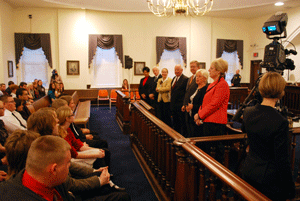
The Supreme Court of the State of Ohio met in the Highland County Common Pleas Courtroom Wednesday, for its 62nd off-site session.
Prior to hearing oral arguments on three separate criminal cases and one civil case, the justices addressed students from Hillsboro High School. The students were permitted to ask questions to the judges, and they then observed the first argument before the court. In addition to Hillsboro, students from Fairfield, McClain, Lynchburg-Clay and Whiteoak high schools, as well as homeschooled students, were rotated in and out of the sessions to observe the proceedings.
Justice Paul Pfeifer told that students that they were in for "an intellectual feast," in watching the oral arguments before the court.
"As you look at your lives ahead of you, where we are now is something we didn't anticipate when we were sitting in the seats you are sitting in," Pfeifer said.
Each justice gave a brief history on what led them to being elected to serve on the Supreme Court of Ohio, including Justice Judith Ann Lanzinger's history as a teacher, Pfeifer's youth growing up on a cattle farm and Justice Robert's Cupp's "first elected office" as president of his local 4-H club.
According to the court, the Off-Site Court Program was initiated in 1987 and "has gained national recognition as a model program for education about the judiciary. The program enhances students’ understanding of the legal system by providing an opportunity to observe the proceedings of the Supreme Court in person and to interact with justices, attorneys and court staff."
Chief Justice Maureen O'Connor said that all the Justices like to interact with students and take the opportunity to educate people who normally do not have contact with the court system.
What happens in the court and the job of the judges, "is so very different from what you see on television. Those judges on the afternoon programs don't do us any good, and they don't do you any good. The court is much more exciting than than what you see on television because we are affecting people's lives. We make case law for the entire state of Ohio and other jurisdictions. It is a humbling honor to serve Ohio. Not many people throughout Ohio's history get to do what we do."
Following the hearings, the students had the opportunity to address the attorneys who argued before the court and ask them about their experience presenting a case before the high court.
"Each community is so different, the students, the teachers, the schools and the lawyers are different," O'Connor said. "That's why it's still very exciting for us to come to off-site sessions, and we try to pick cases that are of interest."
Cupp said that the off-site sessions are typically held in smaller communities and that he likes visiting the different courthouses, which are "a representation of local self-government, and that is why effort and money is always put into courthouses."
Cupp noted that Highland County's Courthouse is the oldest in the state of Ohio in continuous use, and he said, "us being here today has added a little bit to that history."
Since the justices had said that growing up they did not anticipate becoming judge, one student asked what they had hoped to be. Pfeifer said that was the first time they'd had such a question, and that he looked forward to hearing his colleagues' answers.
Pfeifer said he had wanted to be a jet pilot in the Air Force but discovered that he couldn't see the chalkboard in school and considered a career in agriculture. Cupp, who served 16 years in the Ohio Senate, said that he became interested in politics when he was in the eighth grade and pursued a law degree because he thought that would further him in his public service career. When a teacher in the eighth grade initially encouraged him to pursue politics, he said, "I didn't know farm kids from small communities could do that."
Justice Evelyn Lundberg Stratton said she had been a physics major in college, but before she completed her degree, the college dropped that as a major. She was considering what degree she should get when someone told her, "You like to write, and you like to act. Why don't you become a lawyer?" Justice Terrence O'Donnell said that he was a good student and was on the debate team at Kent State that competed in a national competition and it was suggested that he use those skills in a law career.
Justice Lanzinger said that she was the first person in her family to go to college, and that when she went to college, the only career options for women were teachers, nurses or secretaries. After she became a teacher, she attended a party for a person who had recently passed the bar exam, and when she found out, "all you need to get into law school is a degree, that was a real eye-opener."
Justice Yvette McGee Brown said that when she was in high school her main interest was her boyfriend, but an influential teacher told her that she was too smart not to go to college. She went to Ohio University with the intent of becoming a journalist. She said it was suggested to her that she become a lawyer, and she hesitated because she didn't know if she wanted to spend three more years in school.
"I told my grandmother," she said, "'I'll be 25 when I get out of school.' My grandmother said, 'If you're going to live to be 25, why not be 25 and be a lawyer.'"
O'Connor said she had been a pre-med major in undergrad and received a master's degree in education, but after completing student teaching she realized that she did not have the patience to be a classroom teacher. She became a substitute and worked some temporary jobs while she decided what to do with the rest of her life. O'Connor said that she had saved some money and told herself that she would apply to one law school, and if she got in, she would go. If she did not get in, she would take the money and "bum around Europe. I got in, and I never got to bum around Europe."
O'Connor, who was a Lt. Governor under Ohio Gov. Bob Taft, said that the message the students can take away from all their stories is that they need to be open to taking advantage of every opportunity.
"If you know you're capable, equipped and prepared, the only person who can shut the door on your future is you," O'Connor said.
When asked by the students what they liked most about being attorneys and judges, the overall answer was being able to serve the public.
"I like the public service, and being able to help people who can't help themselves," O'Connor said, "and being an advocate (as a private attorney) and as a judge, helping find the solution. I hope you're inspired by what you hear and see today."
For more on the cases heard before the court, including a civil case regarding enforcement of Ohio's public smoking band, check back to highlandcountypress.com.
The Supreme Court of the State of Ohio met in the Highland County Common Pleas Courtroom Wednesday, for its 62nd off-site session.
Prior to hearing oral arguments on three separate criminal cases and one civil case, the justices addressed students from Hillsboro High School. The students were permitted to ask questions to the judges, and they then observed the first argument before the court. In addition to Hillsboro, students from Fairfield, McClain, Lynchburg-Clay and Whiteoak high schools, as well as homeschooled students, were rotated in and out of the sessions to observe the proceedings.
Justice Paul Pfeifer told that students that they were in for "an intellectual feast," in watching the oral arguments before the court.
"As you look at your lives ahead of you, where we are now is something we didn't anticipate when we were sitting in the seats you are sitting in," Pfeifer said.
Each justice gave a brief history on what led them to being elected to serve on the Supreme Court of Ohio, including Justice Judith Ann Lanzinger's history as a teacher, Pfeifer's youth growing up on a cattle farm and Justice Robert's Cupp's "first elected office" as president of his local 4-H club.
According to the court, the Off-Site Court Program was initiated in 1987 and "has gained national recognition as a model program for education about the judiciary. The program enhances students’ understanding of the legal system by providing an opportunity to observe the proceedings of the Supreme Court in person and to interact with justices, attorneys and court staff."
Chief Justice Maureen O'Connor said that all the Justices like to interact with students and take the opportunity to educate people who normally do not have contact with the court system.
What happens in the court and the job of the judges, "is so very different from what you see on television. Those judges on the afternoon programs don't do us any good, and they don't do you any good. The court is much more exciting than than what you see on television because we are affecting people's lives. We make case law for the entire state of Ohio and other jurisdictions. It is a humbling honor to serve Ohio. Not many people throughout Ohio's history get to do what we do."
Following the hearings, the students had the opportunity to address the attorneys who argued before the court and ask them about their experience presenting a case before the high court.
"Each community is so different, the students, the teachers, the schools and the lawyers are different," O'Connor said. "That's why it's still very exciting for us to come to off-site sessions, and we try to pick cases that are of interest."
Cupp said that the off-site sessions are typically held in smaller communities and that he likes visiting the different courthouses, which are "a representation of local self-government, and that is why effort and money is always put into courthouses."
Cupp noted that Highland County's Courthouse is the oldest in the state of Ohio in continuous use, and he said, "us being here today has added a little bit to that history."
Since the justices had said that growing up they did not anticipate becoming judge, one student asked what they had hoped to be. Pfeifer said that was the first time they'd had such a question, and that he looked forward to hearing his colleagues' answers.
Pfeifer said he had wanted to be a jet pilot in the Air Force but discovered that he couldn't see the chalkboard in school and considered a career in agriculture. Cupp, who served 16 years in the Ohio Senate, said that he became interested in politics when he was in the eighth grade and pursued a law degree because he thought that would further him in his public service career. When a teacher in the eighth grade initially encouraged him to pursue politics, he said, "I didn't know farm kids from small communities could do that."
Justice Evelyn Lundberg Stratton said she had been a physics major in college, but before she completed her degree, the college dropped that as a major. She was considering what degree she should get when someone told her, "You like to write, and you like to act. Why don't you become a lawyer?" Justice Terrence O'Donnell said that he was a good student and was on the debate team at Kent State that competed in a national competition and it was suggested that he use those skills in a law career.
Justice Lanzinger said that she was the first person in her family to go to college, and that when she went to college, the only career options for women were teachers, nurses or secretaries. After she became a teacher, she attended a party for a person who had recently passed the bar exam, and when she found out, "all you need to get into law school is a degree, that was a real eye-opener."
Justice Yvette McGee Brown said that when she was in high school her main interest was her boyfriend, but an influential teacher told her that she was too smart not to go to college. She went to Ohio University with the intent of becoming a journalist. She said it was suggested to her that she become a lawyer, and she hesitated because she didn't know if she wanted to spend three more years in school.
"I told my grandmother," she said, "'I'll be 25 when I get out of school.' My grandmother said, 'If you're going to live to be 25, why not be 25 and be a lawyer.'"
O'Connor said she had been a pre-med major in undergrad and received a master's degree in education, but after completing student teaching she realized that she did not have the patience to be a classroom teacher. She became a substitute and worked some temporary jobs while she decided what to do with the rest of her life. O'Connor said that she had saved some money and told herself that she would apply to one law school, and if she got in, she would go. If she did not get in, she would take the money and "bum around Europe. I got in, and I never got to bum around Europe."
O'Connor, who was a Lt. Governor under Ohio Gov. Bob Taft, said that the message the students can take away from all their stories is that they need to be open to taking advantage of every opportunity.
"If you know you're capable, equipped and prepared, the only person who can shut the door on your future is you," O'Connor said.
When asked by the students what they liked most about being attorneys and judges, the overall answer was being able to serve the public.
"I like the public service, and being able to help people who can't help themselves," O'Connor said, "and being an advocate (as a private attorney) and as a judge, helping find the solution. I hope you're inspired by what you hear and see today."
For more on the cases heard before the court, including a civil case regarding enforcement of Ohio's public smoking ban, check back to highlandcountypress.com.
[[In-content Ad]]