


Sen. Brown meets with Cincinnati Children's Hospital pediatricians in Washington
Lead Summary
By
Press Release-
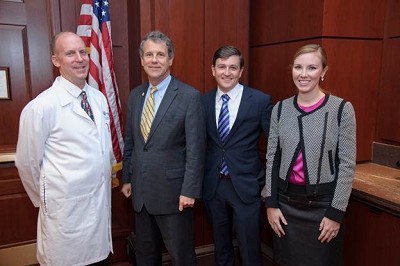
U.S. Sen. Sherrod Brown (D-OH) met this week with members of the American Academy of Pediatrics, including Dr. Patrick McGann and Dr. Sarah Kelley, pediatricians at Cincinnati Children’s Hospital Medical Center. They were joined by Dr. Garret Hunt, a pediatrician at Nationwide Children’s Hospital in Columbus.
The group attended Brown’s weekly coffee with constituents during a visit to Washington, D.C. to advocate for reducing early mortality for children and women.
“It was an honor to meet with Dr. McGann, Dr. Hunt and Dr. Kelley,” said Brown. “They provide critical care for Ohio’s children and their advocacy will help ensure that more children and their mothers can live long, healthy lives.”
Last year, Brown’s landmark legislation to battle back against the rise in infant mortality was signed into law by President Obama. The Sudden Unexpected Death Data Enhancement and Awareness Act will build on existing activities at the Centers for Disease Control and Prevention (CDC) to improve upon the quality and consistency of data collected during death scene investigations and autopsies to better inform prevention and intervention efforts related to stillbirths, Sudden Unexpected Infant Deaths (SUID), and Sudden Unexplained Deaths in Childhood (SUDC). This collaboration with the states to enhance current methods of data collection across existing surveillance systems will enable doctors and researchers to better track and prevent these tragic losses.