


Ohio lawmakers propose drug screening for welfare recipients
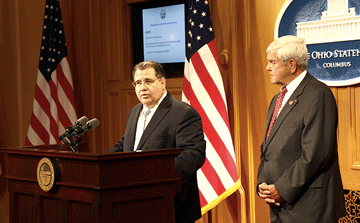
COLUMBUS – Those applying for welfare in Ohio could be screened and tested for illegal drugs under legislation introduced this week in the Ohio Legislature.
State Representative Tim Schaffer (R-Lancaster) and State Representative Ron Maag (R-Lebanon) announced the legislation that they say works to combat the cycle of drug induced poverty.
The bill establishes a two-year pilot program (in at least three counties) within the Ohio Works First (OWF) cash assistance program.
[[In-content Ad]]
Applicants will complete a screening along with their application. The screening is widely used in the mental health field to assess if a person is likely to have substance abuse issues.
If the screening shows a likelihood of dependency, the applicant will be asked to take a drug test. If the test is positive, the applicant will be offered cost free drug treatment and the applicant’s dependents and children will still be able to access the assistance funds through a protective payee.
“We need to continue the fight against the drug epidemic that is ravaging our state. It knows no race, creed, or socio-economic status,” Schaffer said. “This program will not be a means to deny benefits, but rather a means to identify those who need treatment. It will keep taxpayer dollars out of the hands of drug dealers, protect children, and get folks off of drugs and back on their feet.”
“The most important thing is that we get the drug addicted some help,” said Rep. Maag. “This change will identify those individuals so we can take care of them and their families.”
The two representatives pointed to a recent report studying how to reform the OWF program and reduce reliance on public assistance. The study showed that substance abuse and the inability to pass a drug test were the number one barriers to economic independence and reduction of reliance on public assistance for OWF participants. The report featured surveys of JFS directors, non-profits and OWF participants.
The American Civil Liberties Union of Ohio opposes the proposal, saying it unfairly targets one group of people on public assistance.