


Matthew Hutson joins Naval History and Heritage Command
By Glenn Sircy, APR
Navy Office of Community Outreach
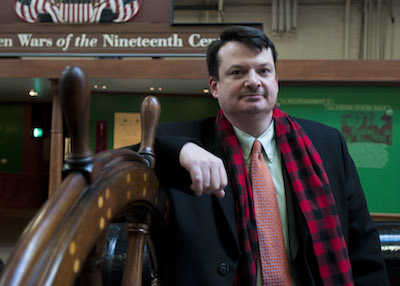
WASHINGTON – Matthew Hutson, a 1992 graduate of St. Louis University High, and a former resident of Wilmington, recently joined the Naval History and Heritage Command located at the Washington Navy Yard.
Working for an Echelon II command for the U.S. Navy, Hutson is a program analyst for the NHHC’s Director’s Action Group.
“My job is great because I get to participate in telling the Navy's story which is America's story,” said Hutson, who earned his Bachelor of Arts degree in 1996 from the George Washington University.
Hutson, provides information and counsel to the director needs to bring the appropriate resources to NHHC’s 10 official Navy museums located throughout the United States.
[[In-content Ad]]
Hutson is amid a staff of professional historians, archivists, librarians, museum specialists, and naval personnel who carry out historical activities and support the Navy fleet.
In his unique position, Hutson says he enjoys the knowledge he accumulates from all of the people he works with on base.
Along with his daily tasks, Hutson is also assisting on a significant project, contributing to efforts in the commemoration of the USS Houston (CA 30), nicknamed “The Galloping Ghost of the Java Coast,” which was sunk in combat during the World War II Battle of Sunda Strait on March 1, 1942.
“The survivors were machine gunned by the Japanese in the water or were taken to Thailand to work on the Burma Railroad,” said Hutson.
The Houston went down near the HMAS Perth (D 29) an Australian cruiser which was also sunk that day. “Unfortunately, the Perth and Houston are targets for salvage ships,” said Hutson.
“By telling the Houston's story we can make sure the sailors' graves are left in peace and they receive the dignity they deserve,” he said.
The Department of the Navy’s sunken ship and aircraft wrecks represent a collection of more than 17,000 fragile, non-renewable cultural resources distributed worldwide. They often serve as war graves, safeguard state secrets, carry environmental and safety hazards such as oil and ordnance, and hold great historical value. While it is not feasible to conduct similar surveys of all sunken military craft, Navy leadership desires to ensure the final resting place of those who made the ultimate sacrifice when Houston went down remains in a respected and solemn condition.
The Sunken Military Craft Act (SMCA) was enacted on Oct. 28, 2004 in order to preserve and protect from unauthorized disturbance all sunken military craft that are owned by the United States government as well as foreign sunken military craft that lie within U.S. waters. Pursuant to the SMCA, the Navy's sunken military craft remain property of the U.S. regardless of their location or the passage of time and may not be disturbed without permission from the U.S. Navy.
More information about the Navy’s museums and U.S. Navy history can be found at the NHHC’s website www.history.navy.mil/.