


Council split on Design Review Board appointments; council member questions necessity of board
Lead Summary
By
Caitlin Forsha-crforsha@gmail.com
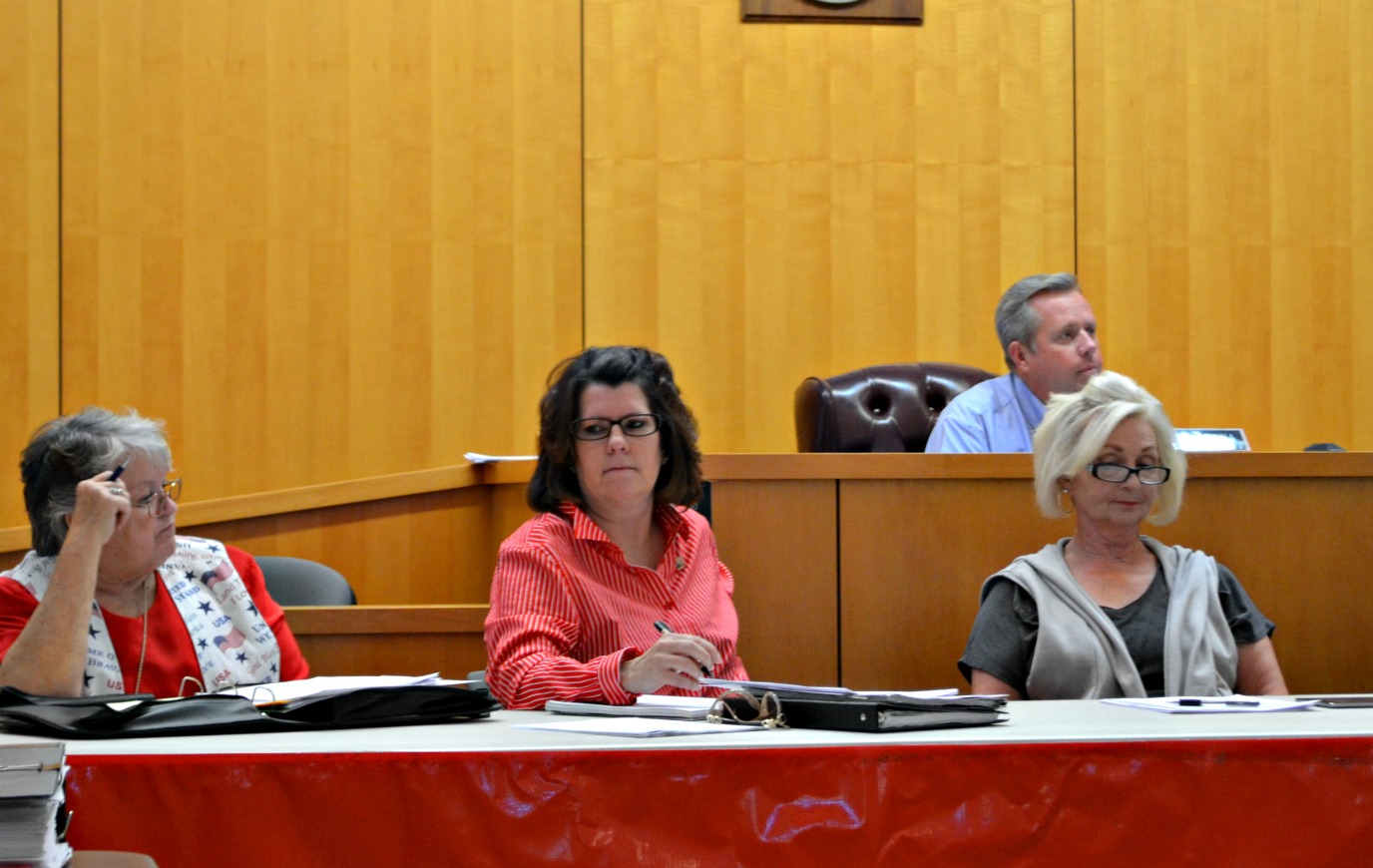
In a split decision, Hillsboro City Council approved a resolution to approve Design Review Board members appointed by the mayor, while one council member proposed disbanding the board altogether.
Design Review Board chair Mary Todd Hardeman opened the citizens’ comments portion of the meeting to address council on the resolution to approve board members appointed by Hillsboro mayor Drew Hastings.
According to an ordinance passed Jan. 3, 1995, the Design Review Board was “established to provide guidance for changes to structures and objects within the designated Hillsboro Historic Business District by providing a means of review to assist in achieving a more pleasing downtown environment; help maintain and enhance the distinctive character and architectural integrity of various period structures and appurtenances; and assure that future intrusions and alterations are appropriate, given environmental, architectural, historical, economic and community development considerations.”
The ordinance also establishes that the five members of the board are to be “two Hillsboro Historic Business District property owners, two owners of Hillsboro Historic Business District businesses, and one representative of the Highland County Historical Society who is also a resident of the city. Members’ terms will be staggered and shall be instituted as follows: Highland County Historical representative - one year; one HHBD Property Owner and one HHBD Business Owner - two years; one HHBD Property Owner and one HHBD Business Owner - three years.”
“As you know, members of the Design Review Board are appointed by the mayor and then approved by you,” Hardeman told council. “I urge you to approve the resolution so that the board may continue its work on behalf of the city.”
Council president Lee Koogler asked council members if they had any questions or comments for Hardeman.
“I don’t have any questions for you,” council member Tracy Aranyos said. “I understand it all. I would just kind of like to request – if you [Koogler] feel there’s enough of us, or if you feel it’s appropriate – I really don’t feel the need for a design review board. I feel like, you know, 20 years ago, it was different.
“Our goal is to make things simpler for business owners. If you look at other towns, everything’s very simple and clear, like historic districts. We have that in our ordinance. It tells you what’s permitted and what’s not.”
Aranyos said that uptown business owners could just view the ordinances on the city’s website to determine “what’s allowed and what’s not allowed” for their buildings.
“I just feel like it makes the process longer, and it’s unneeded,” Aranyos said. “The historic district has everything spelled out, so I don’t really see the need. For the historic district, they already have a list of the colors of paint for the outside in the uptown historic district. I feel like we’re making things harder, and more processes, instead of simpler.
“I just want it to be very simple, to where the public doesn’t have to come before a group or a meeting and wait two or three months – that they just click on our website, everything’s in the ordinance, the rules are right there and it’s approved. If there’s any issues, then it would be put in committee.”
Aranyos said she feels “less government is better than too much.”
“First of all, not everything is listed in the ordinance,” Hardeman said. “You would be amazed at some of the things that come before us. I think it’s a good idea to have everything in the ordinance, but until it is, I think that we’re a temporary measure to help maintain the integrity of uptown until such time as we do have a more fleshed-out ordinance.”
“If something’s left out, then someone can bring it up,” Aranyos said. “We’re appointed. We’re elected officials, and we answer to this.”
Aranyos pointed out that council member Ann Morris, chair of the property maintenance and restoration committee, has considered issues such as signage during her meetings.
“I feel like it’s kind of doing the same thing twice,” Aranyos said. “She’s all the time updating our sign rules and things on that, where you can click on it and see what’s permitted and what’s not permitted, so that we make it simple. We did away with a lot of the fees to make it more simple.”
Council member Bill Alexander asked Hardeman to address “the amount of time that somebody has to wait before a decision is made.”
“About how long does it typically take for something that’s being requested to be approved?” Alexander asked.
“Under the ordinance, the board has from 30 days that the person files a certificate of appropriateness to take action,” Hardeman said.
[[In-content Ad]]
Koogler agreed to allow council to discuss Aranyos’ concerns and placed the matter in both the property maintenance and restoration committee and the community enhancement committee. However, when council considered the resolution to appoint four members to the board, Koogler told council that the legislation needed to be passed in order for the board to continue operations.
“I’m going to give you my two cents on this,” Koogler said. “I don’t do this very often before legislation, but I’ll say this. I understand there’s been a request that we look at the Design Review Board, the operations and what have you. However, it’s still a government entity that is created by statute that is still existing and ongoing and continues to conduct business.
“It would be my position that we need to go ahead and ratify the appointment of the current persons that are on the board so that there isn’t an issue with them conducting business.”
Koogler clarified that council should pass the resolution only “as long as you’re OK with the individuals that are named.”
The resolution reads that Hastings has appointed: himself, as a historic district property owner, for a term expiring April 30, 2019; Hardeman, a historic district property owner, for a term expiring Nov. 1, 2018; Chad Shelton, a historic district business owner, for a term expiring March 1, 2018; and Avery Applegate, Highland County Historical Society representative, for a term expiring March 1, 2018. There is also a vacant spot for a historic district business owner, expiring April 30, 2019.
“Have committees, or has any committee, looked over the appointees in the past to see whether there’s any conflict of interest or anything of that sort?” Alexander asked. “I cannot remember a committee study that has been brought to council, but I guess I’m going to throw open the possibility that we may want a committee to be able to look over this.”
“The committee will look into what’s been placed in it,” Koogler said.
“I’m not looking at the continuance of the Design Review Board – I pretty much favor the continuance of the Design Review Board,” Alexander said. “I’m referring to the specific appointees.”
Koogler repeated that the two committees can consider the matter when they discuss the Design Review Board.
With no further discussion, council member Rebecca Wilkin moved to approve the resolution, with Alexander seconding the motion. The resolution passed 4-3, with Aranyos, Claudia Klein and Morris all voting “no” on the legislation.
Hastings also addressed Aranyos’ concerns with the Design Review Board during his report.
“There was a reason why [the Design Review Board] was formed in 1995,” Hastings said. “I’m not sure what happened to it. I think it got somewhat dormant over the years. One of the things I did when I first took office was to really reactivate it, and I think part of the reason that uptown has looked better and has started to make some real progress, is because of the Design Review Board. I can’t think of a city that’s tried to do anything that does not have a design review board, except maybe Portsmouth, Ohio.”
Hastings said the board is necessary “if you want to have some kind of a structure, overall look and a set of standards for it.”
“I think it’s beyond the scope of council, really, to weigh on those issues on a monthly basis,” Hastings said.
Design Review Board chair Mary Todd Hardeman opened the citizens’ comments portion of the meeting to address council on the resolution to approve board members appointed by Hillsboro mayor Drew Hastings.
According to an ordinance passed Jan. 3, 1995, the Design Review Board was “established to provide guidance for changes to structures and objects within the designated Hillsboro Historic Business District by providing a means of review to assist in achieving a more pleasing downtown environment; help maintain and enhance the distinctive character and architectural integrity of various period structures and appurtenances; and assure that future intrusions and alterations are appropriate, given environmental, architectural, historical, economic and community development considerations.”
The ordinance also establishes that the five members of the board are to be “two Hillsboro Historic Business District property owners, two owners of Hillsboro Historic Business District businesses, and one representative of the Highland County Historical Society who is also a resident of the city. Members’ terms will be staggered and shall be instituted as follows: Highland County Historical representative - one year; one HHBD Property Owner and one HHBD Business Owner - two years; one HHBD Property Owner and one HHBD Business Owner - three years.”
“As you know, members of the Design Review Board are appointed by the mayor and then approved by you,” Hardeman told council. “I urge you to approve the resolution so that the board may continue its work on behalf of the city.”
Council president Lee Koogler asked council members if they had any questions or comments for Hardeman.
“I don’t have any questions for you,” council member Tracy Aranyos said. “I understand it all. I would just kind of like to request – if you [Koogler] feel there’s enough of us, or if you feel it’s appropriate – I really don’t feel the need for a design review board. I feel like, you know, 20 years ago, it was different.
“Our goal is to make things simpler for business owners. If you look at other towns, everything’s very simple and clear, like historic districts. We have that in our ordinance. It tells you what’s permitted and what’s not.”
Aranyos said that uptown business owners could just view the ordinances on the city’s website to determine “what’s allowed and what’s not allowed” for their buildings.
“I just feel like it makes the process longer, and it’s unneeded,” Aranyos said. “The historic district has everything spelled out, so I don’t really see the need. For the historic district, they already have a list of the colors of paint for the outside in the uptown historic district. I feel like we’re making things harder, and more processes, instead of simpler.
“I just want it to be very simple, to where the public doesn’t have to come before a group or a meeting and wait two or three months – that they just click on our website, everything’s in the ordinance, the rules are right there and it’s approved. If there’s any issues, then it would be put in committee.”
Aranyos said she feels “less government is better than too much.”
“First of all, not everything is listed in the ordinance,” Hardeman said. “You would be amazed at some of the things that come before us. I think it’s a good idea to have everything in the ordinance, but until it is, I think that we’re a temporary measure to help maintain the integrity of uptown until such time as we do have a more fleshed-out ordinance.”
“If something’s left out, then someone can bring it up,” Aranyos said. “We’re appointed. We’re elected officials, and we answer to this.”
Aranyos pointed out that council member Ann Morris, chair of the property maintenance and restoration committee, has considered issues such as signage during her meetings.
“I feel like it’s kind of doing the same thing twice,” Aranyos said. “She’s all the time updating our sign rules and things on that, where you can click on it and see what’s permitted and what’s not permitted, so that we make it simple. We did away with a lot of the fees to make it more simple.”
Council member Bill Alexander asked Hardeman to address “the amount of time that somebody has to wait before a decision is made.”
“About how long does it typically take for something that’s being requested to be approved?” Alexander asked.
“Under the ordinance, the board has from 30 days that the person files a certificate of appropriateness to take action,” Hardeman said.
[[In-content Ad]]
Koogler agreed to allow council to discuss Aranyos’ concerns and placed the matter in both the property maintenance and restoration committee and the community enhancement committee. However, when council considered the resolution to appoint four members to the board, Koogler told council that the legislation needed to be passed in order for the board to continue operations.
“I’m going to give you my two cents on this,” Koogler said. “I don’t do this very often before legislation, but I’ll say this. I understand there’s been a request that we look at the Design Review Board, the operations and what have you. However, it’s still a government entity that is created by statute that is still existing and ongoing and continues to conduct business.
“It would be my position that we need to go ahead and ratify the appointment of the current persons that are on the board so that there isn’t an issue with them conducting business.”
Koogler clarified that council should pass the resolution only “as long as you’re OK with the individuals that are named.”
The resolution reads that Hastings has appointed: himself, as a historic district property owner, for a term expiring April 30, 2019; Hardeman, a historic district property owner, for a term expiring Nov. 1, 2018; Chad Shelton, a historic district business owner, for a term expiring March 1, 2018; and Avery Applegate, Highland County Historical Society representative, for a term expiring March 1, 2018. There is also a vacant spot for a historic district business owner, expiring April 30, 2019.
“Have committees, or has any committee, looked over the appointees in the past to see whether there’s any conflict of interest or anything of that sort?” Alexander asked. “I cannot remember a committee study that has been brought to council, but I guess I’m going to throw open the possibility that we may want a committee to be able to look over this.”
“The committee will look into what’s been placed in it,” Koogler said.
“I’m not looking at the continuance of the Design Review Board – I pretty much favor the continuance of the Design Review Board,” Alexander said. “I’m referring to the specific appointees.”
Koogler repeated that the two committees can consider the matter when they discuss the Design Review Board.
With no further discussion, council member Rebecca Wilkin moved to approve the resolution, with Alexander seconding the motion. The resolution passed 4-3, with Aranyos, Claudia Klein and Morris all voting “no” on the legislation.
Hastings also addressed Aranyos’ concerns with the Design Review Board during his report.
“There was a reason why [the Design Review Board] was formed in 1995,” Hastings said. “I’m not sure what happened to it. I think it got somewhat dormant over the years. One of the things I did when I first took office was to really reactivate it, and I think part of the reason that uptown has looked better and has started to make some real progress, is because of the Design Review Board. I can’t think of a city that’s tried to do anything that does not have a design review board, except maybe Portsmouth, Ohio.”
Hastings said the board is necessary “if you want to have some kind of a structure, overall look and a set of standards for it.”
“I think it’s beyond the scope of council, really, to weigh on those issues on a monthly basis,” Hastings said.