


March 3 event to examine health disparities and Alzheimer’s disease
Lead Summary
By
Alzheimer’s Association-
COVID-19 has laid bare some undesirable truths: African Americans and Latinos are disproportionately impacted by the pandemic. In the field of Alzheimer’s and dementia, statistics point to a similar troubling trend, which is why the Alzheimer’s Association is charting a course to intentionally strive for health equity in the delivery of service and research and it wants to bring others along with them.
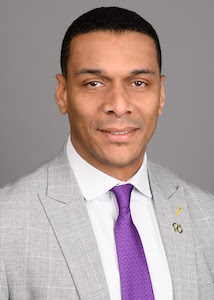
On March 3, the Association is hosting a virtual statewide town hall assembling some of the nation’s top experts in the field of health equity and Alzheimer’s disease to discuss some of the latest research involving underserved communities. Dr. Carl V. Hill, Chief Diversity, Equity and Inclusion Officer for the Alzheimer’s Association, and Peter Lichtenberg, Ph.D., ABPP, President of the Gerontological Society of America (GSA), will host the event.
Dr. Hill said he included topics such as how targeting chronic stress and blood pressure self-care can prevent cognitive decline in African Americans and Alzheimer’s disease and COVID-19 because “you have to acknowledge that these are difficult times with caregiving, caregiving while reducing risk for COVID-19. There is a high level of anxiety and stress, but I believe this is a real opportunity for us to pursue equity in terms of engaging those communities with information, care and support.”
The Dr. James S. Jackson Seminar on Health Equity and Alzheimer's Disease, which will be from 5-6:30 p.m., will have speakers from The Ohio State University; the West Virginia University Rockefeller Neuroscience Institute; the University of Michigan; Michigan State University; and the Michigan Alzheimer’s Disease Research Center.
Dr. Hill said it is important to include and apply health disparities research in the field of dementia because “this research highlights contextual factors for Alzheimer’s and other dementia risk, in the spirit of Dr. James Jackson’s rigorous research at the University of Michigan.” For example, assessing cardiovascular health over a life course and, stress coping “may be part of pathways to Alzheimer’s and other dementia risk for disproportionately affected populations,” Dr. Hill said.
Just like COVID-19, Alzheimer’s and dementia disproportionately impacts communities of color. For example, according to the Alzheimer’s Association:
• African Americans are about twice as likely as whites to have Alzheimer’s or another dementia. Hispanics are 1.5 times more likely to have Alzheimer’s.
• African Americans are more prone to risk factors for vascular disease — like diabetes, high blood pressure and high cholesterol — which may also be risk factors for Alzheimer’s disease and stroke-related dementia.
• African Americans and Hispanics are less likely to have a dementia diagnosis.
• New research from Case Western Reserve University shows African Americans with dementia have close to three times the risk of being infected with COVID-19 as white individuals with dementia.
Dr. Hill said while growing up in College Park, Ga., he witnessed challenges for accessing quality health care. He initially went into public health and developed his interest in health disparities research because he wanted to study “the factors that kept important resources like quality health care from being shared equitably in all communities.”
Today, “this is an urgent opportunity for the Alzheimer’s Association, our chapters and volunteers, to encourage people with information and to take advantage of the resources that we have for them” like the Association’s 24/7 Helpline at (800) 272-3900.
Eric VanVlymen, Ohio Regional Leader of the Alzheimer’s Association, said at the national level the Alzheimer’s Association is committed to not only funding diverse initiatives — like the new IDEAS study, whose goal is to enroll 4,000 African American and Latino participants to determine if amyloid PET scans improve diagnosis and treatment of Alzheimer’s disease — but also committed to working with national partners to ensure that early detection and diagnosis initiatives reach all communities.
Locally, the Alzheimer’s Association is analyzing service levels and looking for community partners who can help the organization work on solutions and outreach to diverse populations to stay to their commitment of health equity in all of Ohio’s communities, he said.
“Being there in the community and working within the community I think is so critically important,” Dr. Hill said. “It’s an unparalleled opportunity to translate research findings, and engage all communities using community-based participatory strategies.”
When people leave the March 3 event, Dr. Hill said he wants “everyone to consider how they can contribute to diversity and inclusion and become ambassadors for a shared vision for health equity as we really look to a world without Alzheimer’s and all other dementia for all communities.”
To register for the Dr. James S. Jackson Seminar on Health Equity and Alzheimer's Disease, visit: alz.org/jackson-seminar.
The Alzheimer's Association is the leading voluntary health organization in Alzheimer's care, support and research. Our mission is to eliminate Alzheimer's disease through the advancement of research; to provide and enhance care and support for all affected; and to reduce the risk of dementia through the promotion of brain health. Our vision is a world without Alzheimer's®. Visit www.alz.org or call our 24/7 Helpline at (800) 272-3900.
[[In-content Ad]]