


UC Clermont students join worldwide search for new antibiotics
Lead Summary
By
UC Clermont-
UC Clermont College is the first institution in Ohio to join 150 participating schools in 35 states, Puerto Rico and 14 countries in the Small World Initiative. The Small World Initiative was formulated and launched at Yale University in 2012 and uses undergraduate research to tackle the growing problem of antibiotic resistance head-on.
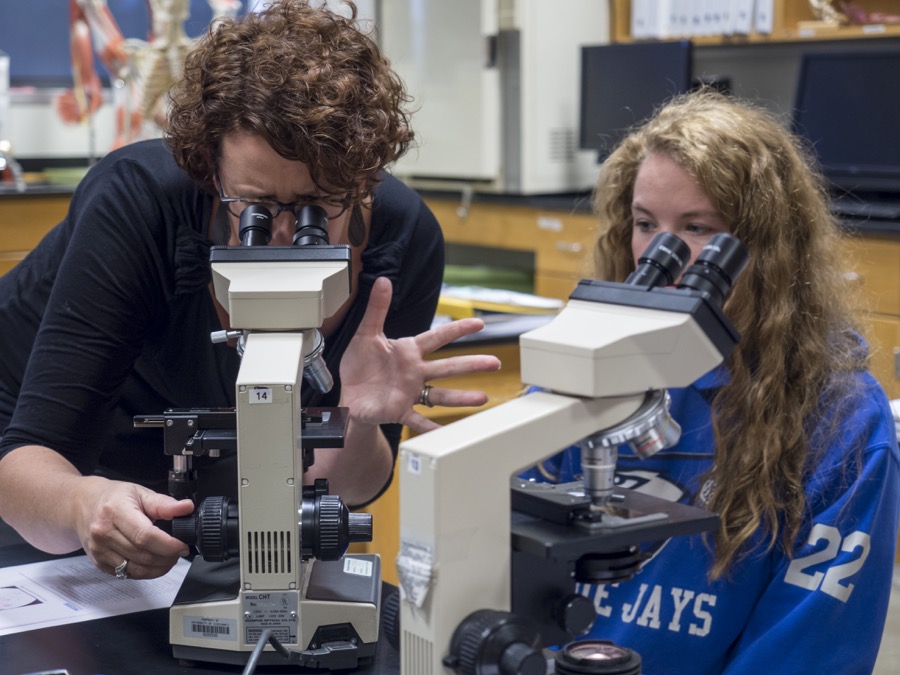
Professor Krista Clark, a cell biologist by training, is helping her introductory biology students participate in a global citizen scientist collaborative effort to discover new antibiotics.
[[In-content Ad]]
Students participate in a semester-long research project in lab. It begins by isolating bacteria from soil samples taken from their local environments (just one gram of soil, Clark said, can contain anywhere from 4,000 to 40,000 different species of bacteria).
Most of the current antibiotics on the market where originally isolated from soil bacteria, Clark explained, so these bacteria are believed to be a vast untapped resource for new antibiotics. The bacteria that students isolate are screened for their ability to produce antibiotics that are effective against safe relatives of some of the most antibiotic-resistant bacteria faced in healthcare today.
Students then amplify genomic DNA of these antibiotic-producing bacteria to begin the process of identifying the bacterial species. All antibiotic-producing isolates are banked in a worldwide database shared by Small World Initiative participants. They are made available to researchers who may want to expand the analysis of the antibiotic produced or to do further characterization of the bacterial strain itself.
Clark said that this type of research is critical at a time when the medical community is seeing a continual increase in infections that are resistant to traditional antibiotics.
“This research could lead to unique antibiotics or variations of existing antibiotics,” Clark said. “There have been no new types of antibiotics developed in more than 30 years because it’s not a profitable area of development for drug companies. We’re seeing more minor infections that used to be easily treated with antibiotics resist what we currently have available.”
Besides being the first step toward possible new life-saving medications, Clark said she’s also interested in increasing the opportunity for undergraduate research at UC Clermont.
“One of my goals in joining the initiative is to get non-majors involved in real science and investigation,” Clark said. “Implementing research projects like this can inspire students to choose the sciences as a major and down the road, a career.”
UC Clermont College is located in the center of Clermont County on 91 beautiful wooded acres in Batavia Township. The college is an accredited, open-access institution offering more than 50 programs and degrees. UC East, a Clermont County expansion in the former Ford plant in Batavia Township, opened in the fall of 2010. It is home to UC Clermont's Allied Health programs. The college is part of the nationally recognized University of Cincinnati. For more information, call 513-732-5200 or visit www.ucclermont.edu.
Professor Krista Clark, a cell biologist by training, is helping her introductory biology students participate in a global citizen scientist collaborative effort to discover new antibiotics.
[[In-content Ad]]
Students participate in a semester-long research project in lab. It begins by isolating bacteria from soil samples taken from their local environments (just one gram of soil, Clark said, can contain anywhere from 4,000 to 40,000 different species of bacteria).
Most of the current antibiotics on the market where originally isolated from soil bacteria, Clark explained, so these bacteria are believed to be a vast untapped resource for new antibiotics. The bacteria that students isolate are screened for their ability to produce antibiotics that are effective against safe relatives of some of the most antibiotic-resistant bacteria faced in healthcare today.
Students then amplify genomic DNA of these antibiotic-producing bacteria to begin the process of identifying the bacterial species. All antibiotic-producing isolates are banked in a worldwide database shared by Small World Initiative participants. They are made available to researchers who may want to expand the analysis of the antibiotic produced or to do further characterization of the bacterial strain itself.
Clark said that this type of research is critical at a time when the medical community is seeing a continual increase in infections that are resistant to traditional antibiotics.
“This research could lead to unique antibiotics or variations of existing antibiotics,” Clark said. “There have been no new types of antibiotics developed in more than 30 years because it’s not a profitable area of development for drug companies. We’re seeing more minor infections that used to be easily treated with antibiotics resist what we currently have available.”
Besides being the first step toward possible new life-saving medications, Clark said she’s also interested in increasing the opportunity for undergraduate research at UC Clermont.
“One of my goals in joining the initiative is to get non-majors involved in real science and investigation,” Clark said. “Implementing research projects like this can inspire students to choose the sciences as a major and down the road, a career.”
UC Clermont College is located in the center of Clermont County on 91 beautiful wooded acres in Batavia Township. The college is an accredited, open-access institution offering more than 50 programs and degrees. UC East, a Clermont County expansion in the former Ford plant in Batavia Township, opened in the fall of 2010. It is home to UC Clermont's Allied Health programs. The college is part of the nationally recognized University of Cincinnati. For more information, call 513-732-5200 or visit www.ucclermont.edu.