


Early detection in dyslexia
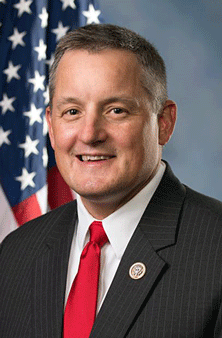
By U.S. Rep. Bruce Westerman
R-Arkansas
With early detection becoming more critical, schools across Arkansas are seeing a greater need for trained professionals who understand learning disabilities like dyslexia. Thankfully, opportunities continue to arise to create the workforce necessary to meet this demand.
Last year, the University of Arkansas announced its partnership with the Academic Language Therapy Association and the Nelms Dyslexia Center to create a new master’s degree pathway for those looking to pursue a career in learning development.
Since then, we have seen the expansion of the university’s graduate pathway extend beyond our state’s borders, we’ve seen federal funding pumped into the state to promote research around literacy teaching, and other initiatives pop up across the state that are focused on empowering young learners to overcome the barriers of dyslexia.
As we learn more about dyslexia, we see how early detection and intervention can make a massive difference in student success. In 2017, the Journal of Educational Psychology published a study that followed a group of first-, second-, and third-grade students with reading disabilities who participated in a reading intervention method that had been found effective in previous research.
The study concluded that the first- and second-grade students had made larger improvements toward basic reading skills compared to the third-grade students. And more notably, the first graders were reported to develop their reading at a faster pace long after the controlled program had ended.
These studies proved what we now know to be true: early intervention is crucial for children who struggle to read due to a learning disability and coupled with the right tools, even just one year can make all the difference in setting them up for success.
As the co-chair of the Congressional Dyslexia Caucus, I was proud to introduce a resolution this week that recognizes October as Dyslexia Awareness Month.
Dyslexia impacts one in five Americans, and our educators, parents, and students need clarity and support to meet this learning disability head on. This resolution works to highlight the importance of continued advocacy and awareness around this learning disability while underscoring a commitment to fostering a more inclusive learning environment for all students.