


Memorial Day: ‘Fail not yearly to observe this day’
Lead Summary
By
Steve Roush-
Ladies and gentlemen, Monday, May 30, 2016 is Memorial Day, a day which was also observed on Monday, May 30 in the year of our Lord 1881.
Before we pause to remember those who served and sacrificed this coming Monday, let’s take a step back in time to see how Memorial Day, then called Decoration Day, was observed in Hillsboro 135 years ago.
Monday, May 30, 1881 was an excessively warm day in Hillsboro, Ohio, but nevertheless, at the appointed time, a procession formed uptown on High Street, headed by the 13th Regiment Band, and proceeded to the Catholic, Odd Fellows and Hillsboro Cemeteries, the little girls having decorated the graves in the Presbyterian Cemetery before the procession formed.
The procession, almost a mile in length, composed of the band, Scott Dragoons, Noble Light Guard, Veteran Soldiers, citizens in vehicles, on foot and on horseback, and the carriages containing the day’s orator and minister and the little girls and decorating committee. Capt. George E. Richards acted as Chief Marshal.
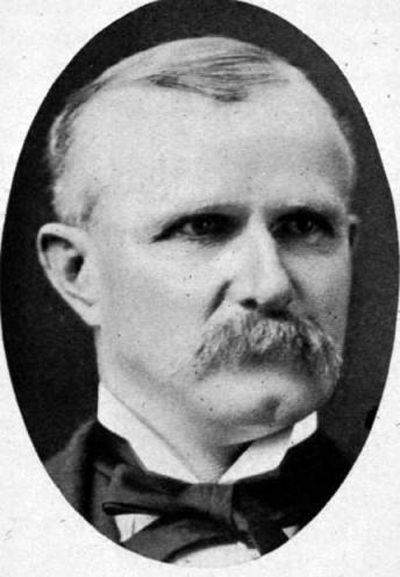
After the graves were all decorated, the crowd assembled around the spring in the Hillsboro Cemetery, where the exercises were opened by music by the band, followed by a prayer by the Rev. William Jasper McSurely (who we featured in a history column earlier this year). After the prayer, Ulric Sloane, Esquire, (who made a pair of appearances in this history column back in 2014), the orator of the day, was introduced by Capt. E.M. DeBruin.
Between 1,500 and 2,000 people were present, and all were charmed with the oration, which was described as “the finest ever delivered in this city.”
On that hot day in May, Ulric Sloane began his address.
“Ladies and gentlemen, in obedience to a custom now followed throughout our entire land, we have met to strew garlands over the graves of our patriot dead; to commemorate the service of the nation’s heroes, now sleeping their last long sleep.
“What grand recollections throng upon us in the observance of this day set apart to our patriot dead. We gaze back upon a panorama, appalling in the grandeur of its scenes, the sublimity of its awfulness, the lights and shadows of a magnificent epoch.
“The nations stand in listening awe as the indistinct rumbling of distant thunder grates upon the straining ear. The mutterings of a tempest wax louder and fiercer, and, at last, burst in the thunder and lightning of the artillery, which played upon Sumter, into the most terrible tornado that ever raged among humankind.”
As Sloane, who would have been 30 years old in 1881, spoke of the Civil War, he said, “How vividly now come back to us who remained at home, far from the dread scenes of battle, matron and maid, helpless manhood and childhood, all the varying and conflicting emotions we experienced through those long, dark days, when deadly strife waged on the Southern plains. ‘Dead,’ ‘wounded,’ ‘missing;’ became to us familiar words, and almost lost their dread import as they fell upon the ear. The crape hung prone from many a door and the cries of lamentation went up from many a fireside rendered desolate by war’s dread need…
“To those of you whom I address, who have comrades sleeping here, who yourselves went through that terrible struggle, bearing arms for your country, what visions appear?”
As many orators have said for many, many years, Sloane told the large gathering that we should never forget our patriot dead.
“We come hither in this beautiful dwelling place of the dead, now, when nature has donned her loveliest dress. … We come with song, with music and with prayer, and with words of remembrance of worthy deeds. We scatter upon the turf that wraps the clay of our heroic dead, tears – true offerings of sorrow; flowers – true offerings of love. But above all, we enshrine them in our hearts. There is found their most hallowed and endearing sepulcher.”
Sloane said that to live in the hearts the patriot dead leave behind “is not to die.”
“Nor shall their memories die! Their deeds have already been and are today being hymned by loftier harps than mine, and year after year will the men and women of our fair land, in memory of them, gather and perform the ceremony we perform today.
“But do we derive no benefit from the observance of this day? Performs it not a use? Are there no lessons to be learned? Ah, yes! Here is to be received annually the refreshing showers of patriotism.
“Here we may bring the young and show them how a nation honors its heroic dead. They will be taught of the deeds they did, of the ‘battles, sieges, fortunes,’ they passed, of their hardships endured, of their sufferings borne, their blood shed, and their lives given that we and future generations might be forever free. … As your sons and daughters gaze upon the enduring monuments of our prosperity and greatness, tell them that the strong cement of the mighty structure is the blood of the nation’s slaughtered sons.”
Sloane concluded his eloquent address by saying we should never fail to honor the patriot dead.
“These graves will be the fruitful nursery of patriots; the deeds these tombs record, the sacred watchwords of the future. Fail not yearly to observe this day. Let it be the most sacred in the nation’s calendar. Let the memory of the services of the brave men whose graves we bedeck be ever kept fresh and pure as the garlands we strew. ‘For theirs are the deeds which should not pass away, and names that must not wither, though the Earth forgets her empires with a just decay.’
“The waves of either ocean, the lakes that lash our Northern shores, the blue waves of the Gulf, as they lazily lap our Southern boundaries, the wind-swept forests with their thousand tongues, join with our voices as we raise our hymn of praise and remembrance in this great Cathedral of God, domed by His blue sky and frescoed with His magnificent show of clouds. In this great temple, a grateful nation of fifty million worships today, thanking the God of Nations that he gave us such noble offerings as these graves contain, to sacrifice on the holy altar of Liberty.”
As we return to 2016, may we heed the perspicacious words Ulric Sloane (1850-1912) spoke 135 years ago in the Hillsboro Cemetery.
Steve Roush is a vice president of an international media company and a columnist and contributing writer for The Highland County Press. He can be reached by email at roush_steve@msn.com.
Before we pause to remember those who served and sacrificed this coming Monday, let’s take a step back in time to see how Memorial Day, then called Decoration Day, was observed in Hillsboro 135 years ago.
Monday, May 30, 1881 was an excessively warm day in Hillsboro, Ohio, but nevertheless, at the appointed time, a procession formed uptown on High Street, headed by the 13th Regiment Band, and proceeded to the Catholic, Odd Fellows and Hillsboro Cemeteries, the little girls having decorated the graves in the Presbyterian Cemetery before the procession formed.
The procession, almost a mile in length, composed of the band, Scott Dragoons, Noble Light Guard, Veteran Soldiers, citizens in vehicles, on foot and on horseback, and the carriages containing the day’s orator and minister and the little girls and decorating committee. Capt. George E. Richards acted as Chief Marshal.
After the graves were all decorated, the crowd assembled around the spring in the Hillsboro Cemetery, where the exercises were opened by music by the band, followed by a prayer by the Rev. William Jasper McSurely (who we featured in a history column earlier this year). After the prayer, Ulric Sloane, Esquire, (who made a pair of appearances in this history column back in 2014), the orator of the day, was introduced by Capt. E.M. DeBruin.
Between 1,500 and 2,000 people were present, and all were charmed with the oration, which was described as “the finest ever delivered in this city.”
On that hot day in May, Ulric Sloane began his address.
“Ladies and gentlemen, in obedience to a custom now followed throughout our entire land, we have met to strew garlands over the graves of our patriot dead; to commemorate the service of the nation’s heroes, now sleeping their last long sleep.
“What grand recollections throng upon us in the observance of this day set apart to our patriot dead. We gaze back upon a panorama, appalling in the grandeur of its scenes, the sublimity of its awfulness, the lights and shadows of a magnificent epoch.
“The nations stand in listening awe as the indistinct rumbling of distant thunder grates upon the straining ear. The mutterings of a tempest wax louder and fiercer, and, at last, burst in the thunder and lightning of the artillery, which played upon Sumter, into the most terrible tornado that ever raged among humankind.”
As Sloane, who would have been 30 years old in 1881, spoke of the Civil War, he said, “How vividly now come back to us who remained at home, far from the dread scenes of battle, matron and maid, helpless manhood and childhood, all the varying and conflicting emotions we experienced through those long, dark days, when deadly strife waged on the Southern plains. ‘Dead,’ ‘wounded,’ ‘missing;’ became to us familiar words, and almost lost their dread import as they fell upon the ear. The crape hung prone from many a door and the cries of lamentation went up from many a fireside rendered desolate by war’s dread need…
“To those of you whom I address, who have comrades sleeping here, who yourselves went through that terrible struggle, bearing arms for your country, what visions appear?”
As many orators have said for many, many years, Sloane told the large gathering that we should never forget our patriot dead.
“We come hither in this beautiful dwelling place of the dead, now, when nature has donned her loveliest dress. … We come with song, with music and with prayer, and with words of remembrance of worthy deeds. We scatter upon the turf that wraps the clay of our heroic dead, tears – true offerings of sorrow; flowers – true offerings of love. But above all, we enshrine them in our hearts. There is found their most hallowed and endearing sepulcher.”
Sloane said that to live in the hearts the patriot dead leave behind “is not to die.”
“Nor shall their memories die! Their deeds have already been and are today being hymned by loftier harps than mine, and year after year will the men and women of our fair land, in memory of them, gather and perform the ceremony we perform today.
“But do we derive no benefit from the observance of this day? Performs it not a use? Are there no lessons to be learned? Ah, yes! Here is to be received annually the refreshing showers of patriotism.
“Here we may bring the young and show them how a nation honors its heroic dead. They will be taught of the deeds they did, of the ‘battles, sieges, fortunes,’ they passed, of their hardships endured, of their sufferings borne, their blood shed, and their lives given that we and future generations might be forever free. … As your sons and daughters gaze upon the enduring monuments of our prosperity and greatness, tell them that the strong cement of the mighty structure is the blood of the nation’s slaughtered sons.”
Sloane concluded his eloquent address by saying we should never fail to honor the patriot dead.
“These graves will be the fruitful nursery of patriots; the deeds these tombs record, the sacred watchwords of the future. Fail not yearly to observe this day. Let it be the most sacred in the nation’s calendar. Let the memory of the services of the brave men whose graves we bedeck be ever kept fresh and pure as the garlands we strew. ‘For theirs are the deeds which should not pass away, and names that must not wither, though the Earth forgets her empires with a just decay.’
“The waves of either ocean, the lakes that lash our Northern shores, the blue waves of the Gulf, as they lazily lap our Southern boundaries, the wind-swept forests with their thousand tongues, join with our voices as we raise our hymn of praise and remembrance in this great Cathedral of God, domed by His blue sky and frescoed with His magnificent show of clouds. In this great temple, a grateful nation of fifty million worships today, thanking the God of Nations that he gave us such noble offerings as these graves contain, to sacrifice on the holy altar of Liberty.”
As we return to 2016, may we heed the perspicacious words Ulric Sloane (1850-1912) spoke 135 years ago in the Hillsboro Cemetery.
Steve Roush is a vice president of an international media company and a columnist and contributing writer for The Highland County Press. He can be reached by email at roush_steve@msn.com.