


Ghost Stories: Celebrating the Fourth, Part II
Lead Summary
By
Steve Roush-
Ladies and gentlemen, I hope everyone had a safe and happy Fourth of July. Now that the festival is finished and the fireworks have been fired, let’s return to the year of our Lord 1874, and rejoin the July 4 Temperance Picnic at the fairgrounds in Hillsboro.
When we left the Fourth of July observances, we had heard a patriotic address from Joseph Jefferson McDowell, a former U.S. congressman who also served in the Ohio House and Senate, and we had also heard from the Rev. Emile Felix Grand-Girard and his sister, Emilie Louise Grand-Girard.
Before we slip back into the services, I should mention that the event was preserved for posterity by Henry S. Doggett. Mr. Doggett, who was born Oct. 15, 1836, was a school superintendent in Hillsboro for many years, and it has been said that he positively influenced many lives as a prominent educator, plus was instrumental in the formation and advancement of the Hillsboro public library.
Mr. Doggett died on April 25, 1890 at the age of 53 in Welsh, La. after taking control of a county newspaper.
In the May 8, 1890 edition of the Hillsboro News-Herald, it was written that he suffered a “sad and sudden death,” and that the services were conducted by the Rev. Dr. William Jasper McSurely, who we profiled in our Ghost Stories series earlier this year and mentioned briefly last week.
It was written that the Rev. McSurely spoke of Mr. Doggett’s “hard struggle with the appetite that so sadly wrecked the close of his life, and bespoke for him a charitable remembrance. The whole occasion was a very sad one. … Many were moved to tears and the tenderest sympathy was shown by all. In the course of his remarks, Dr. McSurely spoke somewhat in this strain: As we think of this poor man’s fall, let us not say that the fault was all his own. Has the state no responsibility which allows these pitfalls to stand enticing the young? Has society no account to render which, through social usages, tempts men and makes it more difficult for the weak to stand? Have tippling men no responsibility who, by their conduct, help to break down the moral sentiment on this temperance question? Let him who is without sin cast the first stone at this man.”
Well, on that sobering note, let’s get back to the 1874 Fourth of July temperance services…
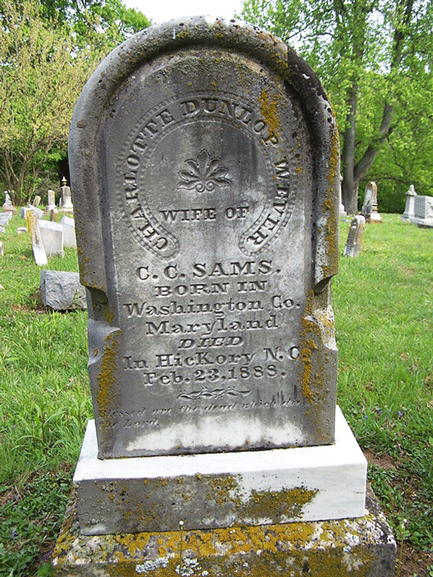
The next speaker of the day was Mrs. Carleton Clare Sams.
Mrs. Sams’ name was Charlotte Dunlop Wever Sams, and if the name Wever rings a bell, her parents were Caspar Willis Wever and Jane Catharine Dunlop Wever. And if the name Caspar rings a bell, Charlotte’s older sister, Catharine Willis Wever, married William Oliver Collins and their first-born was Caspar Wever Collins.
That’s correct, folks. I’m talking about that Caspar Collins, the young man who was killed in the Battle of Platte River Bridge in 1865. The town of Casper, Wyo. is named in his honor, and I’ve had the honor of portraying Caspar a handful of times over the past few years.
Caspar’s aunt Charlotte was born in 1820, and had married Dr. Carleton Sams, a physician who passed away in 1865 at the age of 50. Their only son, Walter, passed away in 1844 (the year Caspar was born). Walter was just 9 months old when he died. Their only daughter, Mary, passed away just four months after her father died. She was only 19.
On that Fourth of July in 1874, Charlotte Sams spoke pleasantly of the duty of all to celebrate the birthday of American liberty. She referred to the temperance cause as one that should be near to the hearts of all, and exhorted her hearers not to falter or grow weary in the work.
After Mrs. Sams spoke, the song “A Thousand Tears” was sung by Capt. G.B. Gardner in a very expressive manner. It pleased the people so well that they requested it to be sung again in the afternoon.
Recess was then given for lunch, and huge baskets loaded with provisions were brought forth. Lunch was spread in picnic style on the green sward. Everybody was provided for, and if anyone went hungry it was their own fault.
On reassembling at 2 p.m., after more music, Mrs. Strange addressed the crowd for a few minutes. This venerable woman gave some very interesting personal reminiscences of her life, and expressed in forcible language her interest in the temperance cause. She said there were two movements very dear to her – the temperance crusade and the Granger organization.
She was followed by Mrs. Sarah McDowell, who made an earnest appeal for the temperance cause, expressing her convictions of duty as a worker for the cause.
Mrs. Eliza Jane Trimble Thompson and Mrs. Pickering were the other lady speakers of the afternoon. Doggett wrote that both of these ladies have been prominent workers in the temperance cause, and made forcible appeals to the people not to falter or give up the work. They each exhorted voters to “vote against License,” and thought that if the liquor traffic was legalized “it would put an end to all effective work against intemperance.”
Doggett wrote, “The speeches of all the ladies were characterized by moderation and kindness. They seemed to be free from anything like fanaticism, and to be the result of that sober second thought which promises great things for the cause.”
The Rev. Dr. McSurely was next called upon, and referred to the wholesale condemnation of politicians and public officers. He did not approve of this, but counseled that all should investigate and be satisfied of the unworthiness of every public man, rather than hastily and indiscriminately to condemn. This investigation once made, if the officer were found corrupt or unworthy, he should by our votes be hurled swiftly from power and position.
The time fixed for adjournment had nearly come, when it was announced that ex-saloon keeper John Calvin Van Pelt was present. He was called out and made a few characteristic remarks, which were listened to “with curiosity and attention.”
Doggett concluded his report by writing, “The meeting then adjourned with the Doxology, and some sought their homes and others remained on the grounds in social converse. The day passed pleasantly to all, and the occasion was characterized by quiet and good order.”
As the sun sets on that Fourth of July 142 years ago, let’s pause for now, and we’ll continue next week.
Steve Roush is a vice president of an international media company and a columnist and contributing writer for The Highland County Press. He can be reached by email at roush_steve@msn.com.
When we left the Fourth of July observances, we had heard a patriotic address from Joseph Jefferson McDowell, a former U.S. congressman who also served in the Ohio House and Senate, and we had also heard from the Rev. Emile Felix Grand-Girard and his sister, Emilie Louise Grand-Girard.
Before we slip back into the services, I should mention that the event was preserved for posterity by Henry S. Doggett. Mr. Doggett, who was born Oct. 15, 1836, was a school superintendent in Hillsboro for many years, and it has been said that he positively influenced many lives as a prominent educator, plus was instrumental in the formation and advancement of the Hillsboro public library.
Mr. Doggett died on April 25, 1890 at the age of 53 in Welsh, La. after taking control of a county newspaper.
In the May 8, 1890 edition of the Hillsboro News-Herald, it was written that he suffered a “sad and sudden death,” and that the services were conducted by the Rev. Dr. William Jasper McSurely, who we profiled in our Ghost Stories series earlier this year and mentioned briefly last week.
It was written that the Rev. McSurely spoke of Mr. Doggett’s “hard struggle with the appetite that so sadly wrecked the close of his life, and bespoke for him a charitable remembrance. The whole occasion was a very sad one. … Many were moved to tears and the tenderest sympathy was shown by all. In the course of his remarks, Dr. McSurely spoke somewhat in this strain: As we think of this poor man’s fall, let us not say that the fault was all his own. Has the state no responsibility which allows these pitfalls to stand enticing the young? Has society no account to render which, through social usages, tempts men and makes it more difficult for the weak to stand? Have tippling men no responsibility who, by their conduct, help to break down the moral sentiment on this temperance question? Let him who is without sin cast the first stone at this man.”
Well, on that sobering note, let’s get back to the 1874 Fourth of July temperance services…
The next speaker of the day was Mrs. Carleton Clare Sams.
Mrs. Sams’ name was Charlotte Dunlop Wever Sams, and if the name Wever rings a bell, her parents were Caspar Willis Wever and Jane Catharine Dunlop Wever. And if the name Caspar rings a bell, Charlotte’s older sister, Catharine Willis Wever, married William Oliver Collins and their first-born was Caspar Wever Collins.
That’s correct, folks. I’m talking about that Caspar Collins, the young man who was killed in the Battle of Platte River Bridge in 1865. The town of Casper, Wyo. is named in his honor, and I’ve had the honor of portraying Caspar a handful of times over the past few years.
Caspar’s aunt Charlotte was born in 1820, and had married Dr. Carleton Sams, a physician who passed away in 1865 at the age of 50. Their only son, Walter, passed away in 1844 (the year Caspar was born). Walter was just 9 months old when he died. Their only daughter, Mary, passed away just four months after her father died. She was only 19.
On that Fourth of July in 1874, Charlotte Sams spoke pleasantly of the duty of all to celebrate the birthday of American liberty. She referred to the temperance cause as one that should be near to the hearts of all, and exhorted her hearers not to falter or grow weary in the work.
After Mrs. Sams spoke, the song “A Thousand Tears” was sung by Capt. G.B. Gardner in a very expressive manner. It pleased the people so well that they requested it to be sung again in the afternoon.
Recess was then given for lunch, and huge baskets loaded with provisions were brought forth. Lunch was spread in picnic style on the green sward. Everybody was provided for, and if anyone went hungry it was their own fault.
On reassembling at 2 p.m., after more music, Mrs. Strange addressed the crowd for a few minutes. This venerable woman gave some very interesting personal reminiscences of her life, and expressed in forcible language her interest in the temperance cause. She said there were two movements very dear to her – the temperance crusade and the Granger organization.
She was followed by Mrs. Sarah McDowell, who made an earnest appeal for the temperance cause, expressing her convictions of duty as a worker for the cause.
Mrs. Eliza Jane Trimble Thompson and Mrs. Pickering were the other lady speakers of the afternoon. Doggett wrote that both of these ladies have been prominent workers in the temperance cause, and made forcible appeals to the people not to falter or give up the work. They each exhorted voters to “vote against License,” and thought that if the liquor traffic was legalized “it would put an end to all effective work against intemperance.”
Doggett wrote, “The speeches of all the ladies were characterized by moderation and kindness. They seemed to be free from anything like fanaticism, and to be the result of that sober second thought which promises great things for the cause.”
The Rev. Dr. McSurely was next called upon, and referred to the wholesale condemnation of politicians and public officers. He did not approve of this, but counseled that all should investigate and be satisfied of the unworthiness of every public man, rather than hastily and indiscriminately to condemn. This investigation once made, if the officer were found corrupt or unworthy, he should by our votes be hurled swiftly from power and position.
The time fixed for adjournment had nearly come, when it was announced that ex-saloon keeper John Calvin Van Pelt was present. He was called out and made a few characteristic remarks, which were listened to “with curiosity and attention.”
Doggett concluded his report by writing, “The meeting then adjourned with the Doxology, and some sought their homes and others remained on the grounds in social converse. The day passed pleasantly to all, and the occasion was characterized by quiet and good order.”
As the sun sets on that Fourth of July 142 years ago, let’s pause for now, and we’ll continue next week.
Steve Roush is a vice president of an international media company and a columnist and contributing writer for The Highland County Press. He can be reached by email at roush_steve@msn.com.