


Numerous financial matters approved during Hillsboro City Schools board meeting

Pictured (l-r) are Hillsboro City Schools Board of Education members Tom Milbery, Beverly Rhoads, Bill Myers, Jerry Walker and Larry Lyons. (HCP Photos/Caitlin Forsha)
The Hillsboro City Schools district’s finances were at the forefront of the June 19 school board meeting, as the agenda included reviewing federal grants, authorizing appropriations and expenditures and revising some employee pay-related policies.
The district’s Director of State and Federal Programs, Diane Michael, hosted a public hearing on their federal grant budget prior to the regular meeting, during which the board passed a motion to approve grants for fiscal year 2024.
The proposed federal funds for include:
• 516 Special Education Part B IDEA, $639,108.42 (up from $620,513.36 in 2022-23). This is used for instruction, administrative services for the HCS district and for the non-public schools, St. Mary Catholic School and Hillsboro Christian Academy.
As previously reported, the 2022-23 school year was the final year for St. Mary Catholic School.
“The reason in St. Mary’s is on there is because it’s not officially closed all the way just yet,” Michael said. “We won’t have St. Mary's this next year, just the Christian Academy.”
• 572 Title I (for grades K-3), $859,661.88 (down from $888,203.34 for fiscal year 2023). This is used for salaries and family/community supplies for the HCS district and purchased services for the non-public schools.
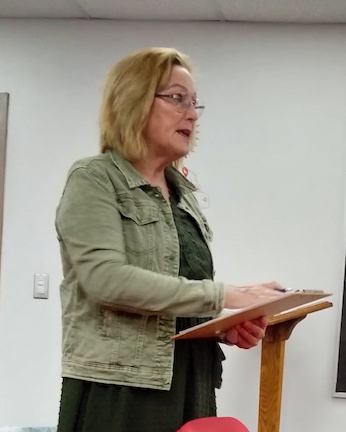
“The non-public funding does not take from our funding,” Michael said. “I want that to be very clear. They have their own money that comes in, and
it just happens we have to be the facilitator or the fiscal agent for them. Their money is not taking away from our money; it’s additional money that just runs through us.”
• 590 Improving Teacher Quality Title IIA, $99,952.11 (down from $118,378.90 the previous year), which is used for professional development.
• 584 (599) Title IV-A Student Support and Academic Enrichment, $69,795.98 (down from $71,017.94 last year), which is used for safety/school resource officers.
Michael said the district has not yet received their $8,000 High Schools That Work funding, which is also used for professional development. They also have not gotten their 587 Early Childhood Special Education IDEA funds, so that amount is unknown, but last year it was $19,024.05, she said. Those funds are used for itinerant services through Hopewell, according to Michael.
Included on the list of funding were the district’s ESSER (Elementary and Secondary School Emergency Relief Fund) grants, the federal relief dollars received due to COVID-19. However, as pointed out by Michael and district treasurer Ben Teeters, those funds will be completely expended by December 2023. The funding included ESSER I, $785,574.54, used for administrative salaries/fringes and COVID-19 safety supplies; ESSER II, $3,075,912.66, used for salaries/fringes and safety supplies, cleaning supplies and personal protective and equipment; and ARP ESSER, $4,605,375.26, used for before/after school activities (20 percent) and facility improvements (80 percent).
“That money has now been used and gone and not coming back,” Michael said. “It paid for a lot of things.”
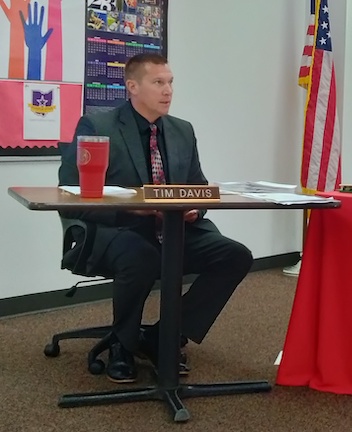
A previous major expenditure from last summer was also discussed during Monday’s meeting, as superintendent Tim Davis gave a progress report on the baseball/softball field construction work at the high school in his update to the board.
As previously reported, in July 2022, the HCS board authorized the $2.7 million purchase of artificial turf and its installation through Southwestern Ohio Education Purchasing Council from The Motz Group, LLC, upgrading the soccer field to a turf field and installing turf baseball and softball infields at the HHS athletic complex.
“We are getting very close to the end,” Davis told the board Monday. “We’re waiting on some concrete work to be done and also dealing with fencing. The same company is doing the fence, so instead of coming on site at two different times, they're going to wait and do the whole thing once we are done.
“We have trenched over from the track, to the baseball/softball field is what we're on now, to have electricity for future scoreboards and different things behind home plate. That is right now what is in the process, and once that is trenched, then The Motz Group will finish up their concrete, and then the only thing left for their part of the contract will be that fencing piece.”
Davis added that other improvements — “dugouts, bleachers, things like that” — will be future upgrades by the district.
Along with accepting the grants, most of the June meeting was spent approving finance-related items to close out the 2023 fiscal year and/or prepare for the 2024 fiscal year and 2023-24 school year.
In other financial matters:
• With board president Bill Myers casting a rare no vote, the board voted 4-1 to recommend the special education supervisor position be approved for pickup.
According to Teeters, “pickup” means the district “will pay the cost of the STRS [State Teachers Retirement System] for the employee instead of that amount coming out of their paycheck. All other administrators already have this benefit.”
Davis explained that the reason the supervisors were not already eligible for pickup was because the position had changed in the past few years.
“When they started the special ed supervisor position, we had a director,” Davis said. “The director of special ed is kind of on the same line as our high school principal and our central office administrator. We went away from that position and went to two special ed supervisors, one 6-12 and one pre-K-5, and in that position, it did not have pickup with it.
“We still do not have a director, so we want to apply the special ed supervisor with pickup because they're the administrator for special ed for their respective buildings.”
In response to questions from Myers and board member Larry Lyons, Davis confirmed that the district will continue to employ two supervisors instead of one director.
• In separate motions, the board approved a change of contracted days for two different district positions.
The school computer technology assistants will be moved from a 230-day contract to a 260-day contract, while the school psychologists’ contract is changing from 203 7.25-hour days to 185 eight-hour days.
For the computer technology assistant position, Davis said the issue is one is currently “230 with no vacation,” and the other is “230 with vacation.” The district also has run into issues where they need the assistants to be working in the summer to get everything “prepared to go for the next school year.
“That stuff is very difficult to happen when both the 230 employees work until about June 15 and are off until either July 1, or with the vacation, they're off until about July 15,” Davis said. “A lot of our summer stuff. It's just our technology director here, so we want to add some flexibility in adding them more days, and they both will receive vacation.”
Board member Jerry Walker pointed out that you have to “subtract their vacation days and national holidays” from the 260 days and argued that there’s “not much more time on task.”
“We're paying for 260 days, but they’ll really be working 260 minus their vacation days, the personal days and the national holidays,” he said.
Teeters responded, “Otherwise, they were working 230 days, and one of them had vacation besides that,” while Davis added the other employee still had personal time and national holidays off too. Lyons said the district will have “coverage the whole time,” too, without everyone on break over the summer at the same time.
For the psychologist position, Davis said they are “not in either union,” and the district has worked with the psychologists to come up with a better schedule.
“These employees don't do a lot of prep work without students,” Davis said. “There's also a shortage of school psychologists, so to try to attract, to be more appealing, [we’ll] have them work eight hours instead of seven and a quarter and cut their time down to 185 days to where they're here when the students are in the building.
“Through our conversations, we realized that if we have one that stays from year to year, they can front-load next year's work at the end of the year to kind of be prepared to come ready to go. This is a chance for us to have them 45 minutes extra for 185 days, instead of being here when students are not in the building.”
Davis said the pay scale will remain “the same, and the hours and the time are almost identical.”
• The board approved adding a step 10, step 12 and step 14 to the administrators’ pay scale.
“Our administrative scale goes from step one to step nine,” Davis said. “It has been that way for multiple years, and I would like to recommend the fact of just adding one step to get to 10, and then the two years after that, for 12 and 14.
“We do have administrators in the district that have been here a long time, and I think that is that is good for our consistency when we have administrators in the same positions.”
Davis added that it is “the same percentage between one, two and three, just added on for the added steps.”
“Where they’re at step nine now, to create step 10, I increase it by one percent,” Teeters said. “Then from step 10 to step 12, I increase that another one percent.”
In response to a question from Myers, Teeters confirmed that the pay scale change would impact all administrators in the district.
“So they've been on step raises, basically, along with getting raises when we've approved raises, over the years?” Myers asked.
“Up through [step] nine,” Davis said. “If they are 10-plus, they would just be receiving whatever increase they got with the unions — cost of living or whatever our percentage was.
“Currently, our teachers are up to step 28 in our teacher contract.”
• The board approved the final appropriations for fiscal year 2023, which showed a total of $49,282,741.74 appropriated.
The appropriations included: General Fund, $29,839,668.40; Bond Retirement, $1,700,342.74; Permanent Improvement, $3,990,997.90; Food Service, $1,852,428.70; Special Trust, $3,250; Endowment, $7,500; Public School Support, $193,786.99; Classroom Facilities Maintenance, $1,216,280; Termination Benefits (HB 426), $200,000; Student Managed Activity, $248,773.68; District Managed Activity, $341,186.41; Auxiliary Services, $358,972.49; Data Communication Fund, $9,000; Vocational Education Enhancements, $13,504.58; Student Wellness and Success, $175,662.42; Elementary/Secondary School Emergency Relief, $6,503,041.58; Ohio Safety Grant, $500,000; Title IV Part A Student Support, $117,997.30; IDEA Part B Grants, $842,228.50; Title I Disadvantaged Children, $1,035,100.69; IDEA Preschool Grant, $34.08; Improving Teacher Quality Grant, $132,366.77; and Miscellaneous Federal Grant Funds, $618.51.
“The ESSERS money made the total appropriations a larger amount than it has been in the years past,” Teeters said. “We spent about $49 million. Big business.”
• The board approved the temporary appropriations for fiscal year 2024, totaling an estimated $36,888,203.34. Those include: General Fund, $25 million; Bond Retirement, $1.5 million; Permanent Improvement, $3.5 million; Food Service, $1.7 million; Special Trust, $6,000; Endowment, $10,000; Public School Support, $170,000; Classroom Facilities Maintenance, $950,000; Termination Fund, $200,000; Student Managed Activity, $225,000; District Managed Activity, $225,000; Auxiliary Services, $154,000; Elementary/Secondary School Emergency Relief, $1.5 million; Data Communication Fund, $9,000; Vocational Education Enhancements, $8,000; IDEA Part B Grant, $650,000; Title I Disadvantaged Children, $888,203.45; Title IV Safety, $65,000; IDEA Preschool Grant, $18,000; and Miscellaneous Federal Grant Funds, $110,000.
“These are just temporary so we can get the year started, and then in September, we'll put on the permanent ones for the year starting out,” Teeters said. “We got the general fund at $25 million, and last year we spent $29 million, so that figure will be coming more into line closer to 30 [million dollars].”
• Also authorized were the purchase orders over $25,000 for fiscal year 2024, including: American Electric Power, $400,000; AT&T, $36,000; Ennis & Britton LPA, $30,000; Auditor of State, $35,000; Gordon Foods, $600,000; RD Holder, $200,000; Hillsboro Public Utilities, $96,000; United Dairy Inc., $101,000; Millennium Business, $53,000; Multi-Vendor, $473,000; Pepsi, $30,000; Pike Natural Gas, $76,000; and Rumpke, $40,000.
• The board approved two motions related to a $500,000 K-12 School Safety Grant previously awarded by the state.
According to the Ohio Governor’s Office, the grant program was created “to help pay for physical security expenses such as new security cameras, public address systems, automatic door locks, visitor badging systems, and exterior lighting. Eligible schools could receive as much as $100,000 per building.”
Hillsboro City Schools received a total of $500,000 in the program’s third round, including $100,000 each for the high school, middle school, intermediate school, primary school and early childhood center.
Approved Monday were an “urgent necessity resolution, which will grant the superintendent and the treasurer the authority to solicit quotes for the security video cameras, to be installed in all of the buildings, paid for with the Ohio Safety Grant funds;” and a separate motion to accept a contract for the security video cameras.
“We have to have this grant spent by December 31,” Teeters said. “The technology director got three different quotes for these cameras. In order to go ahead and start the process, this is an urgent necessity for the security of the school buildings for us to go ahead and get this installed.”
In response to a question from Lyons, Davis explained that this will not only upgrade the cameras, but the software systems as well.
“When we’re replacing cameras, we have to redo basically the system behind it for storage, upgrading all of that into one system,” Davis said. “Right now, we've got middle school, high school, elementary, bus garage. This is tying in the entire district so everybody will have access to all cameras and different things in one place, so we’re upgrading the entire system.”
• The board approved a resolution for facility improvement to complete work on the elementary school roof, which will cost $417,000 and will be paid through the Facilities Maintenance fund, according to Teeters.
Davis said it will finish the roof for “half of the 4/5 [grade] pod” and all of the “2/3 [grade] pod,” and the district intends to “finish up the K-1 [grade] pod hopefully the following year.”
• The board accepted the financial reports as presented, with Teeters saying “things are good.”
According to Teeters, the district had a general fund cash balance of $9,557,768 for May 2023, up from $8,249,041 in May 2022; expenses of $2,375,681, up from $2,366,688 last year; and revenues of $3,213,040, up from $2,040,613 a year ago.
“The revenue is up this month compared to last year's because we received the balance of our real estate tax monies,” Teeters said. “We’re running right now about $9,000 more per month in expenses than we did this time last year.”
• The board accepted two transfers between line items: a $162,650 transfer and a $53,162 transfer.
“When we set up the appropriations, we have contingency monies, and we transfer $50,000 each month into the bond retirement fund,” Teeters said. “These are the balances that's left in that account, and so we're putting $162,000 into the bond retirement account from that, and the $53,000 will go into the severance pay program.”
In other discussion:
• In other updates since the last meeting, Davis reported that the 2023 graduation ceremony was “very nice,” while freshman Jailyn Williams competed in the OHSAA State Track & Field Championships.
• Board member Beverly Rhoads recapped the June Great Oaks Board of Directors meeting, which included a review of treasurer/CFO strategies and president/CEO strategies and related actions during the 2022-23 school year.
• In three separate motions, the board approved the 2023-24 Elementary Handbook; 2023-24 Preschool Handbook; and Middle School/High School Handbook.
The elementary and preschool handbooks didn’t have “huge changes,” Davis said, mostly dealing with the updated school calendar.
For the middle school/high school handbook, the superintendent said the only major change was dealing with their Chromebook policy to cut down on “wear and tear” to the devices.
“The only real thing is the one-to-one deal with Chromebooks,” Davis said. “We're going to try to pilot again sixth graders not taking those home, as far as all the time. We’ve got a lot of the Chromebooks that are being broke are mostly by some sixth graders, dealing with putting them in their bookbags.
“If they don't need to take them home, we’re not going to. They still have access to them, they can sign them out, but it's not going to be everybody has to take those home.”
• The board approved the following individuals for the contracts and positions indicated:
— Volunteers for 2023-24, Kyah Chaney and Christine Martin, HHS; Doug Conrad, Krista Gard, Julie Horne and Jill Kelch, HES; and Emma Fouch, Lindsay Wilson and Brayden Zimmerman, coaches.
— Summer Food Service Program: Ronna Achor.
— Classified for 2023-24, Tracy Cremer and Jennifer Wilson (cooks).
— Christian Academy tutor for 2023-24, Judy Saaranen.
— Certificated for 2023-24, all one-year contracts: Carrie Gast, curriculum specialist; Quentin Cox and Brian Hughes, intervention specialists; and Lola Royalty, psychologist, part-time (107 days).
— Supplemental for 2023-24: Amy Craig, Donica Grow and Joe Jacky, assistant marching band directors; Kevin Grow, marching band director; and Blake Kibler and Maverick Ward, HS reserve boys basketball coaches.
• The board approved the following individuals for changes of status: Macy Anderson, from BA to BA+15; Bernadette Attinger and Breanne Harp, from BA step 0 to MA step 0; Kayla Bagshaw and Tobi Stevens, from MA to MA+15; Lydia Falgner, from BA step 0 to BA+150; Lindsay Inman, from Hillsboro Intermediate School secretary to athletic district secretary, effective 2023-24 school year; Megan MacIvor, from BA to BA+150; Ben Miller and Lindsey Wagner, from MA+15 to MA+30; and Anissa Simmons, from MA to MA+30.
• The board approved a three-year contract with Pike County Recovery Council, Inc. (TRCC), formerly FRS Connections, for Aug. 1, 2023-July 31, 2026.
Davis said this is a continuation of an existing contract for “mental health counseling,” hospitalization and “partial-day education” through the HCS district for both Hillsboro and surrounding districts. The only change is that it is The Recovery Council instead of FRS, because “they have changed their name,” according to the superintendent.
• The board approved the new language arts series textbooks, “My Perspectives English Language.” The purchase includes physical and digital copies for a total of $111,768.50.
Davis said that curriculum director Carrie Gast and the district’s language arts teachers collaborated to select this series.
• The board approved the liability, fleet and property insurance with Southern Ohio EPC from July 1, 2023-June 30, 2024 in the amount of $125,609. Teeters said this is the same amount as their previous contract.
• The board accepted the following resignations: HS reserve boys basketball coach Trevor Gleadle, effective immediately; district athletic secretary Jason Moberly, effective end of the 2022-23 school year; and special education supervisor Brandy Pitzer, effective at the end of the 2022-23 contract year.
• The board approved a leave of absence for teacher Olivia Page, effective July 15-Oct. 9.
• In two different motions, the board approved the National School Lunch and Breakfast Program and Smart Snack Program as well as the 2023-24 School Lunch Charge Guidelines, to comply with federal food programs.