


Court overrules motion to suppress in armed robbery case
Lead Summary
By
Brandy Chandler-brandychandler@gmail.com
A motion to suppress an alleged written confession was denied Wednesday in Highland County Common Pleas Court in a first-degree felony armed robbery case.
Cole Midlam, 29, was indicted on the charge in July 2010 after he allegedly robbed the Hillsboro Rite-Aid in May 2010. He is scheduled to stand trial on the charge on Monday.
A motion to suppress hearing was held Wednesday in which Midlam's attorney, William Armintrout, alleged that Midlam was not fully Mirandized at the time of the alleged confession and that Midlam asked if he needed an attorney.
In May 2010, Midlam was being held in Greendale, Ind., after he was arrested on outstanding warrants. Officers from Boone County, Ky. interviewed him on May 28 regarding a bank robbery, and later that day, officers from Ohio interviewed Midlam regarding pharmacy robberies. According to testimony, Midlam was advised of his Miranda rights by the Kentucky officers, and he signed a form stating he understood his rights. When Ohio officers began questioning him shortly after the Kentucky interview, he was not re-read his rights but was reminded that he had signed a form.
Highland County Prosecutor Anneka Collins asked the court to deny the motion, saying that a video shows Midlam was reminded he had signed a Miranda form.
While the video shows that Midlam questioned if he needed an attorney, Collins said he did not invoke his right to an attorney in an "unambiguous statement," as required by law.
Collins called detectives Paul Markowski of the Kettering Police Department and Jeff Coleman, of the Huber Heights Police Department to testify. Markowski and Coleman were the Ohio detectives who interviewed Midlam regarding the pharmacy robberies.
Portions of the video was played during Markowski's testimony, which showed Coleman asking Midlam if he remembered signing the Miranda form, and Midlam said he did.
Collins asked Markowski if Midlam asked for an attorney.
"His concern was mainly on being accused of a bank robbery. Initially he questioned himself, asked if he needed an attorney," Markowski said. "Eventually he came to the conclusion he wanted to talk to us. (After that) he did not refer to an attorney and filled out his statement."
Collins said the written statement allegedly contains a confession of the Hillsboro robbery.
[[In-content Ad]]On cross examination, Armintrout asked if either Markowski or Coleman read Midlam his Miranda rights, and they each said they did not. While they said they did not witness the Boone County officers read Midlam his rights, they were presented with the signed form.
According to the Miranda form, Midlam signed it at 12:47 p.m., and the written statement was signed at 3:41 p.m.
In closing statements, Collins said, "Case law in this matter is clear and longstanding," and that the law does not require a police officer to re-Mirandize a suspect during questioning.
Armintrout said, "The evidence clearly shows he was not specifically advised of his Miranda rights" during the questioning by the Ohio officers.
There was a break in the amount of time between the interviews, Armintrout said, and the case law referenced by Collins involved a line of questioning in the same case, not two different cases involving officers from different agencies.
Highland County Common Pleas Court Judge Rocky Coss said that the amount of time both interviews lasted was around three hours, without a lengthy amount of time in between.
Coss said "I don't believe that is the law," regarding Armintrout's assertion that the case law cited involved two separate investigations.
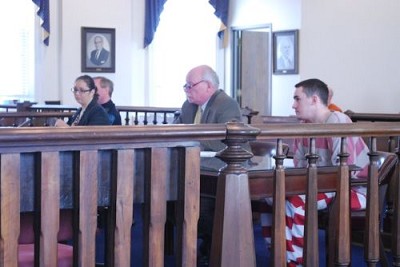
Coss overruled the defense motion to suppress. Midlam had appeared in court in the custody of the Highland County Sheriff's Office. His bond is $25,000, as well as several "holders" from other jurisdictions.
A status hearing on the case was scheduled for Feb. 3 at 1 p.m.
Cole Midlam, 29, was indicted on the charge in July 2010 after he allegedly robbed the Hillsboro Rite-Aid in May 2010. He is scheduled to stand trial on the charge on Monday.
A motion to suppress hearing was held Wednesday in which Midlam's attorney, William Armintrout, alleged that Midlam was not fully Mirandized at the time of the alleged confession and that Midlam asked if he needed an attorney.
In May 2010, Midlam was being held in Greendale, Ind., after he was arrested on outstanding warrants. Officers from Boone County, Ky. interviewed him on May 28 regarding a bank robbery, and later that day, officers from Ohio interviewed Midlam regarding pharmacy robberies. According to testimony, Midlam was advised of his Miranda rights by the Kentucky officers, and he signed a form stating he understood his rights. When Ohio officers began questioning him shortly after the Kentucky interview, he was not re-read his rights but was reminded that he had signed a form.
Highland County Prosecutor Anneka Collins asked the court to deny the motion, saying that a video shows Midlam was reminded he had signed a Miranda form.
While the video shows that Midlam questioned if he needed an attorney, Collins said he did not invoke his right to an attorney in an "unambiguous statement," as required by law.
Collins called detectives Paul Markowski of the Kettering Police Department and Jeff Coleman, of the Huber Heights Police Department to testify. Markowski and Coleman were the Ohio detectives who interviewed Midlam regarding the pharmacy robberies.
Portions of the video was played during Markowski's testimony, which showed Coleman asking Midlam if he remembered signing the Miranda form, and Midlam said he did.
Collins asked Markowski if Midlam asked for an attorney.
"His concern was mainly on being accused of a bank robbery. Initially he questioned himself, asked if he needed an attorney," Markowski said. "Eventually he came to the conclusion he wanted to talk to us. (After that) he did not refer to an attorney and filled out his statement."
Collins said the written statement allegedly contains a confession of the Hillsboro robbery.
[[In-content Ad]]On cross examination, Armintrout asked if either Markowski or Coleman read Midlam his Miranda rights, and they each said they did not. While they said they did not witness the Boone County officers read Midlam his rights, they were presented with the signed form.
According to the Miranda form, Midlam signed it at 12:47 p.m., and the written statement was signed at 3:41 p.m.
In closing statements, Collins said, "Case law in this matter is clear and longstanding," and that the law does not require a police officer to re-Mirandize a suspect during questioning.
Armintrout said, "The evidence clearly shows he was not specifically advised of his Miranda rights" during the questioning by the Ohio officers.
There was a break in the amount of time between the interviews, Armintrout said, and the case law referenced by Collins involved a line of questioning in the same case, not two different cases involving officers from different agencies.
Highland County Common Pleas Court Judge Rocky Coss said that the amount of time both interviews lasted was around three hours, without a lengthy amount of time in between.
Coss said "I don't believe that is the law," regarding Armintrout's assertion that the case law cited involved two separate investigations.
Coss overruled the defense motion to suppress. Midlam had appeared in court in the custody of the Highland County Sheriff's Office. His bond is $25,000, as well as several "holders" from other jurisdictions.
A status hearing on the case was scheduled for Feb. 3 at 1 p.m.