


Coss declares city ordinance unconstitutional
Lead Summary
By
Brandy Chandler-brandychandler@gmail.com
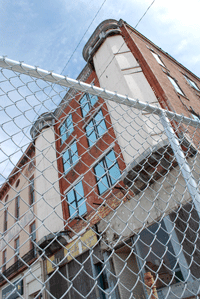
Highland County Common Pleas Court Judge Rocky Coss has entered a decision granting a motion for summary judgment regarding the city of Hillsboro's civil suit with Parker Hotel owner Jack Hope. In the entry filed May 20, Coss said Hillsboro City Ordinance 150.05, regarding "dangerous buildings" is unconstitutional, in that it "denies citizens due process of law."
Hope, at the time acting as his own attorney, filed a complaint against the city of Hillsboro on June 25, 2009, "alleging that he had received a letter dated June 8, 2009 that it intended to solicit bids for the demolition of (Hope's buildings, including the Parker Hotel) located at 131-137 W. Maine St., Hillsboro, Ohio. (Hope) obtained legal counsel and an amended complaint was filed on Sept. 4, 2009. (The city) filed its answer and counterclaim seeking approval of the court for demolition of the building.
"(Hope) alleges in his motion for summary judgment that the Hillsboro City Ordinance Section 150.05 is in direct conflict with (Ohio Revised Code) 715.26 and that it violates his rights to procedural due process guaranteed under the Fourteenth Amendment to the United States Constitution and Article I, Section 16 of the Ohio Constitution. (The city) claims that the ordinance does not conflict with R.C, 715.26 and that it does not provide for an appeal of an order to repair or to remove a building prior to a city's taking action to demolish a building."
The suit was filed in response to a letter sent to Hope by Hillsboro deputy law director Kathryn Hapner, who also represented the city on the case, "informing him that (the city) intended to solicit bids for destruction (of the aforementioned properties) on July 6, 2009. It indicated that the buildings constitute a threat to the public" according to court documents. Hope was sent a letter informing him that he must bring the buildings up to code or the city would solicit bids to demolish them.
The Hillsboro City Council is currently considering a resolution to repeal Ordinance 150.05, and replace it with an ordinance that would allow 30 days to file an objection to a report by the building inspector.
Under the "dangerous buildings" section of the ordinance, it states that the city's "the housing inspector" is authorized to "1. Enter the premises with the assistance of the police department and make a closer inspection of the premises; 2. Abate any serious nuisance posing an immediate threat to the public safety; 3. ban entry into the building and post notices of the same on the building, under penalty of arrest for trespassing; 4. solicit bids for the demolition of the building and removal of the debris; 5. Summon interested parties to a hearing before the housing inspector to acquire further facts. The legislation further states, if any city funds are utilized to demolish, seal or repair an insecure, unsafe or structurally defective building or structure, the same shall be certified to the county auditor for inclusion on the tax duplicate of the property," according to the court.
"Neither parties submitted any evidence that (the city's) housing inspector has issued findings pursuant to the ordinance. The court does not know the identity of the inspector or the contents of his or her findings," according to the court entry. "There was no evidence submitted that the city council passed a resolution authorizing the demolition of the building. The only evidence of the city's actions before the court is the June 9, 2009 letter from (Hapner). Therefore, based upon the evidence actually before the court, it appears to the court that the city has not followed the procedures set forth in its own ordinance."
Coss wrote that because the ordinance does not allow for an appeal process it is also in violation of the ORC, and "is therefore facially invalid under Ohio Law," and even if it did comply with state law, it violates the Fourteenth amendment of the U.S. Constitution, as it does not provide owners with procedural or substantive due process."
The city's assertion that the ORC authorizes a "city to provide for the removal of unsafe or structurally deficient buildings is correct," Coss wrote. "That statute grants the police power to a city to regulate buildings by the Ohio General Assembly. While the right to own and use property is protected b law, a city does have the right to regulate property use and condition in order to safeguard its citizens and the public against unsafe and dangerous conditions of that property."
However, because there is no appeal process is "clearly contrary to law."
"The court agrees with (Hope) that (the city's ordinance) violates the rights of property owners to due process of law as guaranteed by the Fourteenth Amendment to the United States Constitution ... because ti has no provision for a meaningful administrative review of the determinations of the city housing inspector" in that is allows the inspector to "conduct a hearing on his on his own preliminary determination. He is the one who is to record testimony, and make findings. In essence, the housing inspector acts as a witness in the proceedings and probably the prosecuting officer in which he is also acting as a hearing officer.
"The court herby grants (Hope's) motion for summary judgment and enters judgment in (Hope's favor) and against (the city) on the first and second claims ... It is therefore the judgment and order of the court that Hillsboro City Ordinance 150.05 is unconstitutional on its face for the reasons set forth in the foregoing decision. It is therefore ordered and adjudged that the (city) be and is hereby enjoined from taking any action to demolish or remove any of (Hope's) buildings located at 131-137 West Main St. Hillsboro. This does not prohibit (the city) from taking enforcement action in the future once the ordinance has been amended or replaced to comply (with the ORC) an to provide due process to owners of buildings as required by the Fourteenth Amendment to the United States Constitution."
It was ordered that costs are to be paid by the city.
Calls placed to Hope and Hapner seeking comment on the entry were not immediately returned. Hillsboro Safety and Service Director Ralph Holt declined to comment, as he had not read the entry.
Highland County Common Pleas Court Judge Rocky Coss has entered a decision granting a motion for summary judgment regarding the city of Hillsboro's civil suit with Parker Hotel owner Jack Hope. In the entry filed May 20, Coss said Hillsboro City Ordinance 150.05, regarding "dangerous buildings" is unconstitutional, in that it "denies citizens due process of law."
Hope, at the time acting as his own attorney, filed a complaint against the city of Hillsboro on June 25, 2009, "alleging that he had received a letter dated June 8, 2009 that it intended to solicit bids for the demolition of (Hope's buildings, including the Parker Hotel) located at 131-137 W. Main St., Hillsboro, Ohio. (Hope) obtained legal counsel and an amended complaint was filed on Sept. 4, 2009. (The city) filed its answer and counterclaim seeking approval of the court for demolition of the building.
"(Hope) alleges in his motion for summary judgment that the Hillsboro City Ordinance Section 150.05 is in direct conflict with (Ohio Revised Code) 715.26 and that it violates his rights to procedural due process guaranteed under the Fourteenth Amendment to the United States Constitution and Article I, Section 16 of the Ohio Constitution. (The city) claims that the ordinance does not conflict with R.C, 715.26 and that it does not provide for an appeal of an order to repair or to remove a building prior to a city's taking action to demolish a building."
The suit was filed in response to a letter sent to Hope by Hillsboro deputy law director Kathryn Hapner, who also represented the city on the case, "informing him that (the city) intended to solicit bids for destruction (of the aforementioned properties) on July 6, 2009. It indicated that the buildings constitute a threat to the public" according to court documents. Hope was sent a letter informing him that he must bring the buildings up to code or the city would solicit bids to demolish them.
The Hillsboro City Council is currently considering a resolution to repeal Ordinance 150.05, and replace it with an ordinance that would allow 30 days to file an objection to a report by the building inspector.
Under the "dangerous buildings" section of the ordinance, it states that the city's "the housing inspector" is authorized to "1. Enter the premises with the assistance of the police department and make a closer inspection of the premises; 2. Abate any serious nuisance posing an immediate threat to the public safety; 3. ban entry into the building and post notices of the same on the building, under penalty of arrest for trespassing; 4. solicit bids for the demolition of the building and removal of the debris; 5. Summon interested parties to a hearing before the housing inspector to acquire further facts. The legislation further states, if any city funds are utilized to demolish, seal or repair an insecure, unsafe or structurally defective building or structure, the same shall be certified to the county auditor for inclusion on the tax duplicate of the property," according to the court.
"Neither parties submitted any evidence that (the city's) housing inspector has issued findings pursuant to the ordinance. The court does not know the identity of the inspector or the contents of his or her findings," according to the court entry. "There was no evidence submitted that the city council passed a resolution authorizing the demolition of the building. The only evidence of the city's actions before the court is the June 9, 2009 letter from (Hapner). Therefore, based upon the evidence actually before the court, it appears to the court that the city has not followed the procedures set forth in its own ordinance."
Coss wrote that because the ordinance does not allow for an appeal process it is also in violation of the ORC, and "is therefore facially invalid under Ohio Law," and even if it did comply with state law, it violates the Fourteenth amendment of the U.S. Constitution, as it does not provide owners with procedural or substantive due process."
The city's assertion that the ORC authorizes a "city to provide for the removal of unsafe or structurally deficient buildings is correct," Coss wrote. "That statute grants the police power to a city to regulate buildings by the Ohio General Assembly. While the right to own and use property is protected b law, a city does have the right to regulate property use and condition in order to safeguard its citizens and the public against unsafe and dangerous conditions of that property."
However, because there is no appeal process is "clearly contrary to law."
"The court agrees with (Hope) that (the city's ordinance) violates the rights of property owners to due process of law as guaranteed by the Fourteenth Amendment to the United States Constitution ... because ti has no provision for a meaningful administrative review of the determinations of the city housing inspector" in that is allows the inspector to "conduct a hearing on his on his own preliminary determination. He is the one who is to record testimony, and make findings. In essence, the housing inspector acts as a witness in the proceedings and probably the prosecuting officer in which he is also acting as a hearing officer.
"The court herby grants (Hope's) motion for summary judgment and enters judgment in (Hope's favor) and against (the city) on the first and second claims ... It is therefore the judgment and order of the court that Hillsboro City Ordinance 150.05 is unconstitutional on its face for the reasons set forth in the foregoing decision. It is therefore ordered and adjudged that the (city) be and is hereby enjoined from taking any action to demolish or remove any of (Hope's) buildings located at 131-137 West Main St. Hillsboro. This does not prohibit (the city) from taking enforcement action in the future once the ordinance has been amended or replaced to comply (with the ORC) an to provide due process to owners of buildings as required by the Fourteenth Amendment to the United States Constitution."
It was ordered that costs are to be paid by the city.
Calls placed to Hapner seeking comment on the entry were not immediately returned. Hillsboro Safety and Service Director Ralph Holt declined to comment, as he had not read the entry.
"I hear the judge has agreed with us in the summary judgment," Hope told The Highland County Press. "I am very definitely pleased to hear that he agreed with us that the city's ordinance is unconstitutional. I am still trying to come up with a plan to improve downtown Hillsboro."
[[In-content Ad]]"I hear the judge has agreed with us in the summary judgment," Hope told The Highland County Press. "I am very definitely pleased to hear that he agreed with us that the city's ordinance is unconstitutional. I am still trying to come up with a plan to improve downtown Hillsboro."