


'Impropriety' case involving Ohio Supreme Court justice dismissed
Lead Summary
By
Caitlin Forsha-crforsha@gmail.com
An Ohio Board of Professional Conduct case against Ohio Supreme Court Justice Patrick DeWine has been dismissed, according to a decision filed Nov. 9.
As previously reported by The Highland County Press and initially reported by The Columbus Dispatch, a four-count complaint was filed by special disciplinary counsel Bradley N. Frick with the Ohio Court of Appeals Judges Association Tuesday, Jan. 30. The complaint alleged that Justice DeWine has violated several canons of the Ohio Code of Judicial Conduct, including “impartiality and fairness” and “external influences on judicial conduct.”
The filing included allegations of conduct violations by Justice DeWine on hearing cases that involve the office of the Ohio Attorney General, his father Mike DeWine, as well as his involvement with Hamilton County Prosecutor Joe Deters.
However, the complaint was later amended by Frick, and two of the four counts – one involving Deters and another involving a grievance regarding a law school student’s “character and fitness eligibility to take the Ohio Bar Exam – were later dismissed.
The Nov. 9 filing, signed by judges Joyce A. Campbell, Jeffrey R. Ingraham and Michael W. Kramholtz, ordered the dismissal of the remaining two motions, which they said “revolve around the central issue of impropriety.”
As previously reported, the factual allegations in the complaint, on Nov. 4, 2010, Justice DeWine – who at the time was Hamilton County Common Pleas Court Judge – “wrote to Jonathan Marshall, the Secretary of the Supreme Court of Ohio’s Board of Commissioners on Grievances and Discipline, seeking an ethics opinion now that the Attorney General’s Office would be appearing in his courtroom in 2011 and beyond.”
“[Justice DeWine] has stated both personally and through his counsel that Mr. Marshall did not render a written response, but orally told [Justice DeWine] that he need only recuse when his father personally appears before him,” the complaint said.
However, “On Oct. 17, 2016, Jonathan Coughlan, then in private practice but formerly the Disciplinary Counsel of the Supreme Court of Ohio, having served from 1997 to 2013, issued an ethics opinion regarding Respondent’s hearing and deciding cases where his father’s public law firm was involved,” the complaint says. “Coughlan … concluded that [Justice DeWine] ‘recuse himself from all cases where a member of the Attorney General’s office is appearing as counsel or was filing an Amicus brief.’”
According to the complaint filing, special disciplinary counsel met with Justice DeWine Oct. 31, 2017 to discuss “issues raised by [a] … grievance” filed against Justice DeWine in March 2017.
“[Justice DeWine] twice declared that he would not recuse from cases involving the Attorney General’s office unless his father was personally involved in the case or Respondent himself deemed it appropriate to recuse,” the complaint says. “[Justice DeWine] has not explained how he would know if his father was ‘personally involved’ or what criteria he would use to deem it ‘appropriate’ to recuse.”
In the “background” section of the judges’ order of dismissal, it notes that Justice DeWine has recused himself from several cases involving Ohio Attorney General DeWine, including two instances in which “[Justice DeWine was aware that AG DeWine made public comments in the media concerning aspects of these two cases;” a case involving ECOT and the Ohio Department of Education because the justice “became aware of public comments made by AG DeWine in the media concerning a new action filed by the AG involving a related party;” and for “election-related matters arising out of the gubernatorial primary” involving now Governor-elect Mike DeWine.
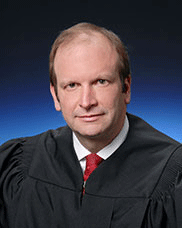
The complaint also noted that “[Justice DeWine]’ likeness appears on his father’s AG website in two places, on his father’s ‘DeWine for Governor’/personal website in at least three places and right next to the Mike DeWine Google search results (where Respondent appears in his judicial robe).”
“While [Justice DeWine] has not made a written or verbal statement publicly endorsing his father for Governor … ‘reasonable minds’ could conclude that these appearances and images are public endorsements by [Justice DeWine] for his father’s gubernatorial candidacy,” the complaint said.
In a later court filing, Justice DeWine said that “he has not violated any of the Judicial Canons.”
“Justice DeWine contends that he was not required to recuse himself from cases in which the AG’s Office is a party or submits an amicus brief based on a number of Ohio Supreme Court cases,” the dismissal filing said. “Further, Justice DeWine asserts that his father, AG DeWine, was not personally involved in any of the four Supreme Court cases at issue. Finally, Justice DeWine claims that his appearance with AG DeWine in family photographs and AG DeWine’s use of [a] swearing-in photograph do not amount to endorsements of the AG and do not violate the Judicial Canons.”
The other count in the complaint that was dismissed this month alleged that Justice DeWine violated the Code of Judicial Conduct by refusing to recuse himself from a case.
In April 2017, Stephen Hanudel, counsel to Robert L. Johnson in Supreme Court case Johnson v. Sloan, filed a request for Justice DeWine to recuse himself from the case because Attorney General DeWine was “counsel of record to a party in the case.” Justice DeWine “denied the request to recuse the very next day and proceeded to hear the case.”
The judges considering the complaint wrote that they were unanimous in their decision “that reasonable minds can come to but one conclusion that the evidence is insufficient to support the charges of misconduct against Justice DeWine, and as such, the hearing panel orders that the Amended Complaint be dismissed in its entirety,” they wrote.
The panel added that they found that “under Rule 2.11, Justice DeWine is not required to disqualify himself from cases in which the AG’s Office is a party or has filed an amicus brief. Rather, Justice DeWine, in accordance with his obligations under the oath of office … should participate in the decisions involving these AG cases.”
The panel wrote that based on the cases in which Justice DeWine did recuse himself, they “cannot find that Relator has established by clear and convincing evidence that Justice DeWine has violated Canon 1.” They also determined that the justice did not violate Canon 4 as alleged, regarding “political or campaign activity.”
“A judge is not required to remove himself from his family or from any affiliation with his family when he undertakes his judicial tenure,” the panel wrote.
The panel recommended that “though there is no requirement that Justice DeWine disqualify himself from cases in which the AG’s Office is a party or has filed an amicus brief, the hearing panel notes that it would be instructive in future cases in which a request for disqualification is denied for Justice DeWine (or any justice) to file an entry or decision in such case which provides the reasons for denying the request.”
As previously reported by The Highland County Press and initially reported by The Columbus Dispatch, a four-count complaint was filed by special disciplinary counsel Bradley N. Frick with the Ohio Court of Appeals Judges Association Tuesday, Jan. 30. The complaint alleged that Justice DeWine has violated several canons of the Ohio Code of Judicial Conduct, including “impartiality and fairness” and “external influences on judicial conduct.”
The filing included allegations of conduct violations by Justice DeWine on hearing cases that involve the office of the Ohio Attorney General, his father Mike DeWine, as well as his involvement with Hamilton County Prosecutor Joe Deters.
However, the complaint was later amended by Frick, and two of the four counts – one involving Deters and another involving a grievance regarding a law school student’s “character and fitness eligibility to take the Ohio Bar Exam – were later dismissed.
The Nov. 9 filing, signed by judges Joyce A. Campbell, Jeffrey R. Ingraham and Michael W. Kramholtz, ordered the dismissal of the remaining two motions, which they said “revolve around the central issue of impropriety.”
As previously reported, the factual allegations in the complaint, on Nov. 4, 2010, Justice DeWine – who at the time was Hamilton County Common Pleas Court Judge – “wrote to Jonathan Marshall, the Secretary of the Supreme Court of Ohio’s Board of Commissioners on Grievances and Discipline, seeking an ethics opinion now that the Attorney General’s Office would be appearing in his courtroom in 2011 and beyond.”
“[Justice DeWine] has stated both personally and through his counsel that Mr. Marshall did not render a written response, but orally told [Justice DeWine] that he need only recuse when his father personally appears before him,” the complaint said.
However, “On Oct. 17, 2016, Jonathan Coughlan, then in private practice but formerly the Disciplinary Counsel of the Supreme Court of Ohio, having served from 1997 to 2013, issued an ethics opinion regarding Respondent’s hearing and deciding cases where his father’s public law firm was involved,” the complaint says. “Coughlan … concluded that [Justice DeWine] ‘recuse himself from all cases where a member of the Attorney General’s office is appearing as counsel or was filing an Amicus brief.’”
According to the complaint filing, special disciplinary counsel met with Justice DeWine Oct. 31, 2017 to discuss “issues raised by [a] … grievance” filed against Justice DeWine in March 2017.
“[Justice DeWine] twice declared that he would not recuse from cases involving the Attorney General’s office unless his father was personally involved in the case or Respondent himself deemed it appropriate to recuse,” the complaint says. “[Justice DeWine] has not explained how he would know if his father was ‘personally involved’ or what criteria he would use to deem it ‘appropriate’ to recuse.”
In the “background” section of the judges’ order of dismissal, it notes that Justice DeWine has recused himself from several cases involving Ohio Attorney General DeWine, including two instances in which “[Justice DeWine was aware that AG DeWine made public comments in the media concerning aspects of these two cases;” a case involving ECOT and the Ohio Department of Education because the justice “became aware of public comments made by AG DeWine in the media concerning a new action filed by the AG involving a related party;” and for “election-related matters arising out of the gubernatorial primary” involving now Governor-elect Mike DeWine.
The complaint also noted that “[Justice DeWine]’ likeness appears on his father’s AG website in two places, on his father’s ‘DeWine for Governor’/personal website in at least three places and right next to the Mike DeWine Google search results (where Respondent appears in his judicial robe).”
“While [Justice DeWine] has not made a written or verbal statement publicly endorsing his father for Governor … ‘reasonable minds’ could conclude that these appearances and images are public endorsements by [Justice DeWine] for his father’s gubernatorial candidacy,” the complaint said.
In a later court filing, Justice DeWine said that “he has not violated any of the Judicial Canons.”
“Justice DeWine contends that he was not required to recuse himself from cases in which the AG’s Office is a party or submits an amicus brief based on a number of Ohio Supreme Court cases,” the dismissal filing said. “Further, Justice DeWine asserts that his father, AG DeWine, was not personally involved in any of the four Supreme Court cases at issue. Finally, Justice DeWine claims that his appearance with AG DeWine in family photographs and AG DeWine’s use of [a] swearing-in photograph do not amount to endorsements of the AG and do not violate the Judicial Canons.”
The other count in the complaint that was dismissed this month alleged that Justice DeWine violated the Code of Judicial Conduct by refusing to recuse himself from a case.
In April 2017, Stephen Hanudel, counsel to Robert L. Johnson in Supreme Court case Johnson v. Sloan, filed a request for Justice DeWine to recuse himself from the case because Attorney General DeWine was “counsel of record to a party in the case.” Justice DeWine “denied the request to recuse the very next day and proceeded to hear the case.”
The judges considering the complaint wrote that they were unanimous in their decision “that reasonable minds can come to but one conclusion that the evidence is insufficient to support the charges of misconduct against Justice DeWine, and as such, the hearing panel orders that the Amended Complaint be dismissed in its entirety,” they wrote.
The panel added that they found that “under Rule 2.11, Justice DeWine is not required to disqualify himself from cases in which the AG’s Office is a party or has filed an amicus brief. Rather, Justice DeWine, in accordance with his obligations under the oath of office … should participate in the decisions involving these AG cases.”
The panel wrote that based on the cases in which Justice DeWine did recuse himself, they “cannot find that Relator has established by clear and convincing evidence that Justice DeWine has violated Canon 1.” They also determined that the justice did not violate Canon 4 as alleged, regarding “political or campaign activity.”
“A judge is not required to remove himself from his family or from any affiliation with his family when he undertakes his judicial tenure,” the panel wrote.
The panel recommended that “though there is no requirement that Justice DeWine disqualify himself from cases in which the AG’s Office is a party or has filed an amicus brief, the hearing panel notes that it would be instructive in future cases in which a request for disqualification is denied for Justice DeWine (or any justice) to file an entry or decision in such case which provides the reasons for denying the request.”